Insights into the work of art wedding planner Lea Bächle
Journal on wedding planning from S&B in Frakfurt am Main
Insights into the work of art wedding planner Lea Bächle
Journal on wedding planning from S&B in Frakfurt am Main
There are weddings that are remembered not only for their beauty, but also for the attitude with which they are designed.
Sepide & Behnam's wedding was just such.
A couple who love art, understand aesthetics and consciously choose every detail. Even during our first conversation, it became clear that this celebration should not be a loud celebration, but a cultured encounter — characterized by atmosphere, architecture and subtle symbolism.
From finding the right location to developing the design concept to meticulous planning on the wedding day, every element was part of a curated overall experience.
A combination of style, structure and meaning that shows how much depth can be created when planning and art speak a common language.
Part 1: Pre-planning — Looking for the right location
Sepide and Behnam became aware of me via Instagram — a very cultured, highly educated and international couple who attach great importance to style, art and atmosphere. From the very first conversation, it was clear that this wedding should not only be a celebration of love, but also an aesthetic experience — sophisticated, and full of cultural references.
They both wanted a Civil wedding in the Römer in Frankfurtfollowed by a intimate celebration with around 30 guests in a Frankfurt museum — ideally with a view of the skyline. A challenge that immediately impressed me.
Together we have four museums visited who came into question. Each of them had its own unique character — and yet finding the perfect balance of architecture, art and functionality wasn't all that easy.
Unfortunately, the most renowned museum in the selection had to be excluded, as it has extended opening hours on Thursdays — exclusive use of the room was not possible on this day. Two other houses on the banks of the Main were atmospherically beautiful, but the rooms proved to be too small. There was a risk that society would feel too pressured — and that was exactly what we wanted to avoid.
Another museum impressed us in terms of space, but the art on display there simply did not match the couple's aesthetic sensibilities. For Sepide and Behnam, the art was not just a backdrop, but an important part of the overall experience — it should interweave with the mood of the day.
A villa that was adjacent to one of the museums seemed a wonderful alternative at first. Unfortunately, the appointment coordination proved difficult — many appointments had already been made at the Frankfurt registry office at that time, which significantly limited our flexibility.
As a result, we had to reject the original idea of celebrating in a museum with a heavy heart. Instead, we opened our eyes to other places with artistic reference and cultural aspiration. The shortlist was finally made Old Opera Restaurant and the FrankfurterHof — both with great architecture, history and flair.
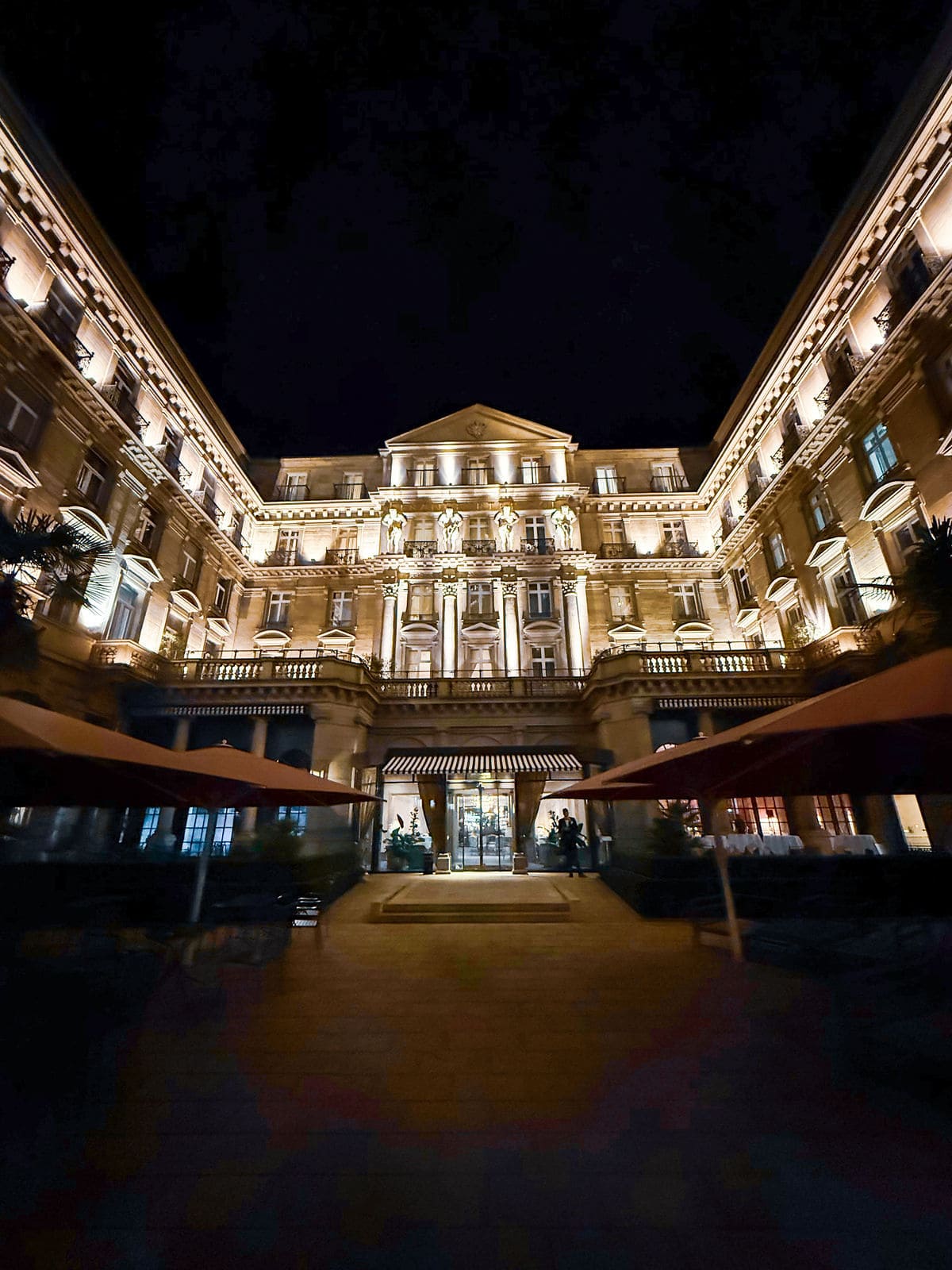
In the end, the decision was made on Frankfurter Hof. For an international couple such as Sepide and Behnam, a hotel was not only logistically ideal, but also an elegant solution for their guests from all over the world. In addition, the house fits perfectly with the vision of the two — classic, artistic and with a cosmopolitan character. The Frankfurter Hof regularly organizes in-house art exhibitions — a wonderful combination of culture and celebration.
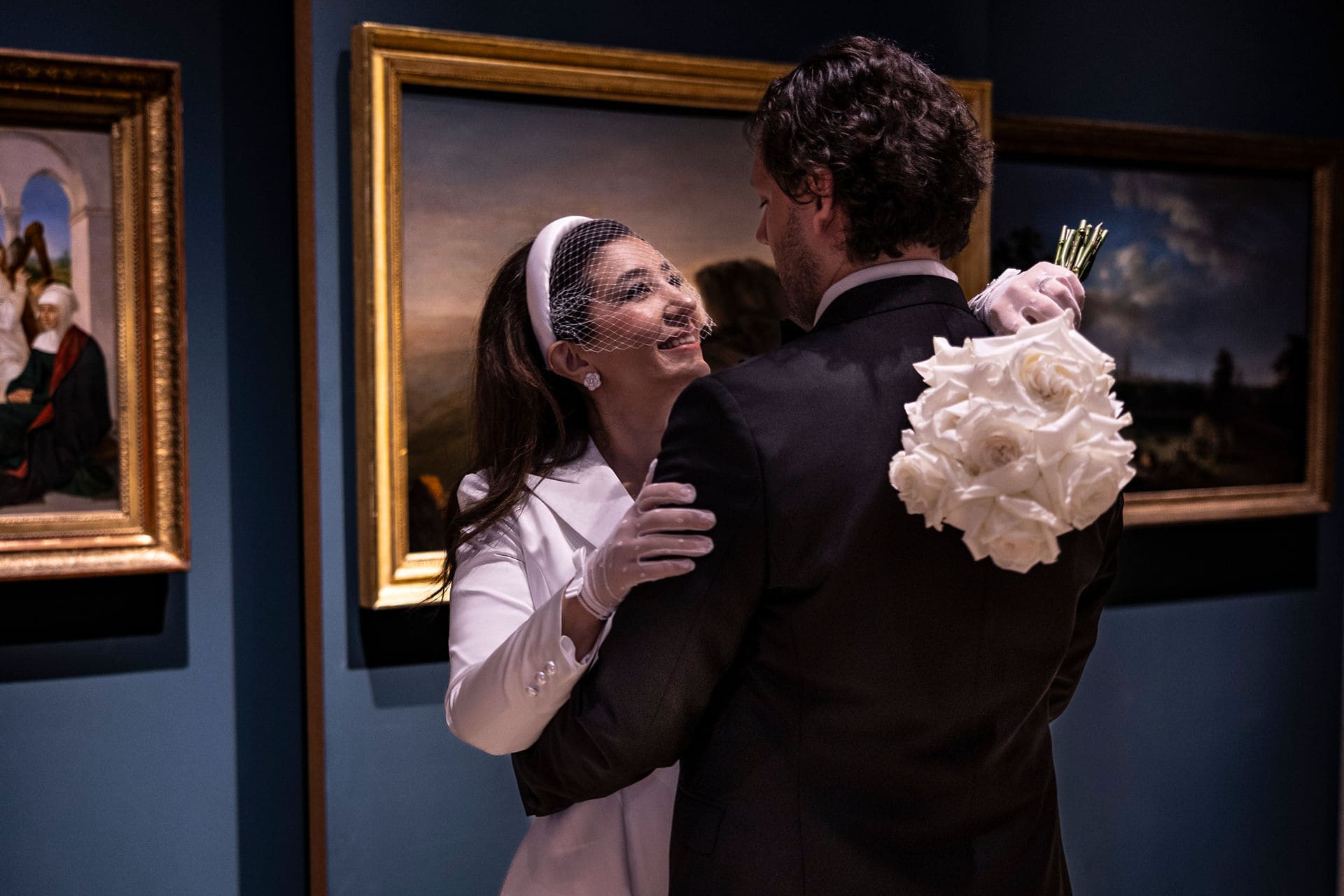
At the same time, it was important for both of them to still visibly integrate their love of art into the wedding day. That is why we deliberately decided to create a intimate bridal couple shoot in a museum to be implemented — as a quiet, personal moment before the civil wedding.
Because of their shared love for Old Masters, art history and Frankfurt, they chose the Frankfurt Historical Museum. A house that is not only culturally deeply rooted in the city, but also offers an ideal setting for an aesthetic bridal couple shoot with its clear lines, quiet rooms and selected works of art. It is particularly suitable for couples who do not want to stage art but want to experience it respectfully.
Another very practical advantage: The Historical Museum is located just a minute's walk from the Römer registry office. In this way, the course of the day could be arranged elegantly and fluidly — without hustle and bustle, without breaks, but with a natural transition of art, emotion and ceremony.
This set the stage for a wedding concept that combines style, art and hospitality — a celebration for all senses that goes perfectly with Sepide and Behnam.
Part 2: Planning — A sophisticated celebration of elegance and meaning
Sepide and Behnam did not want a classic party wedding, but a cultured celebration, which reflects her international origins, her sense of aesthetics and her love of art. Our common goal was to create an atmosphere that calm, elegant and deeply felt is — a celebration that is not loud, but touching.
They made the start invites — designed by lin.oh.wedding
They were a work of art in themselves: aesthetic, clear and timeless — just like the entire wedding concept. Every line, every typography reflected the elegance that ran through all design elements of the day.
Music played a central role for the couple. They wished live jazzto add lightness and class to the party. After an intensive search, the band was finally chosen SwingingSoul — a stroke of luck.
Her music accompanied the champagne reception smooth jazz sounds and became a bit more lively after dinner without ever being obtrusive. The result was an atmosphere that A perfect combination of elegance and joie de vivre — exactly as Sepide and Behnam had imagined.
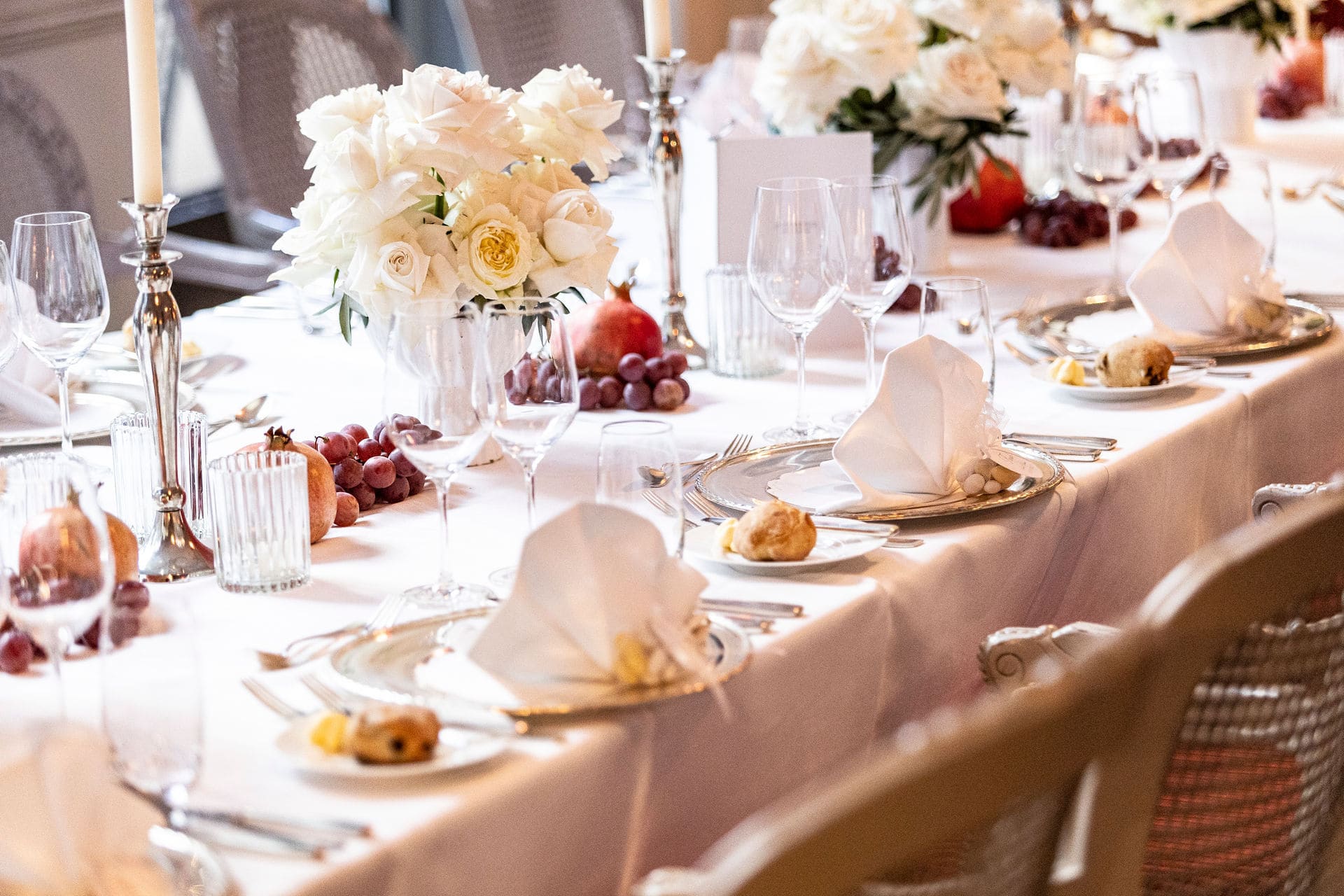
Even with the decoration This subtle taste was reflected. The bride wished only white roses — a symbol of purity, peace and timeless beauty. Her bridal bouquet consisted of long-stemmed white roses, simple and elegant. On the tables were white roses with pomegranates and red grapes combined — a subtle reference to Iranian roots of the couple.
The result was a still-life-like setting that looked like a painting: harmonious, meaningful and full of quiet symbolism.
For the photographic accompaniment, we opted for a Wedding photographer with a background in fashion photography: Rosa&Lynn. This perspective gave the visual language a cosmopolitan touch —stylish, minimalistic and with an eye for fine gestures.
that bridal gown was made specifically according to the wishes of the bride by Mina UAE manufactured — one timeless, elegant design with a touch of nostalgia. Fluent, pure and at the same time full of character — just like Sepide itself.
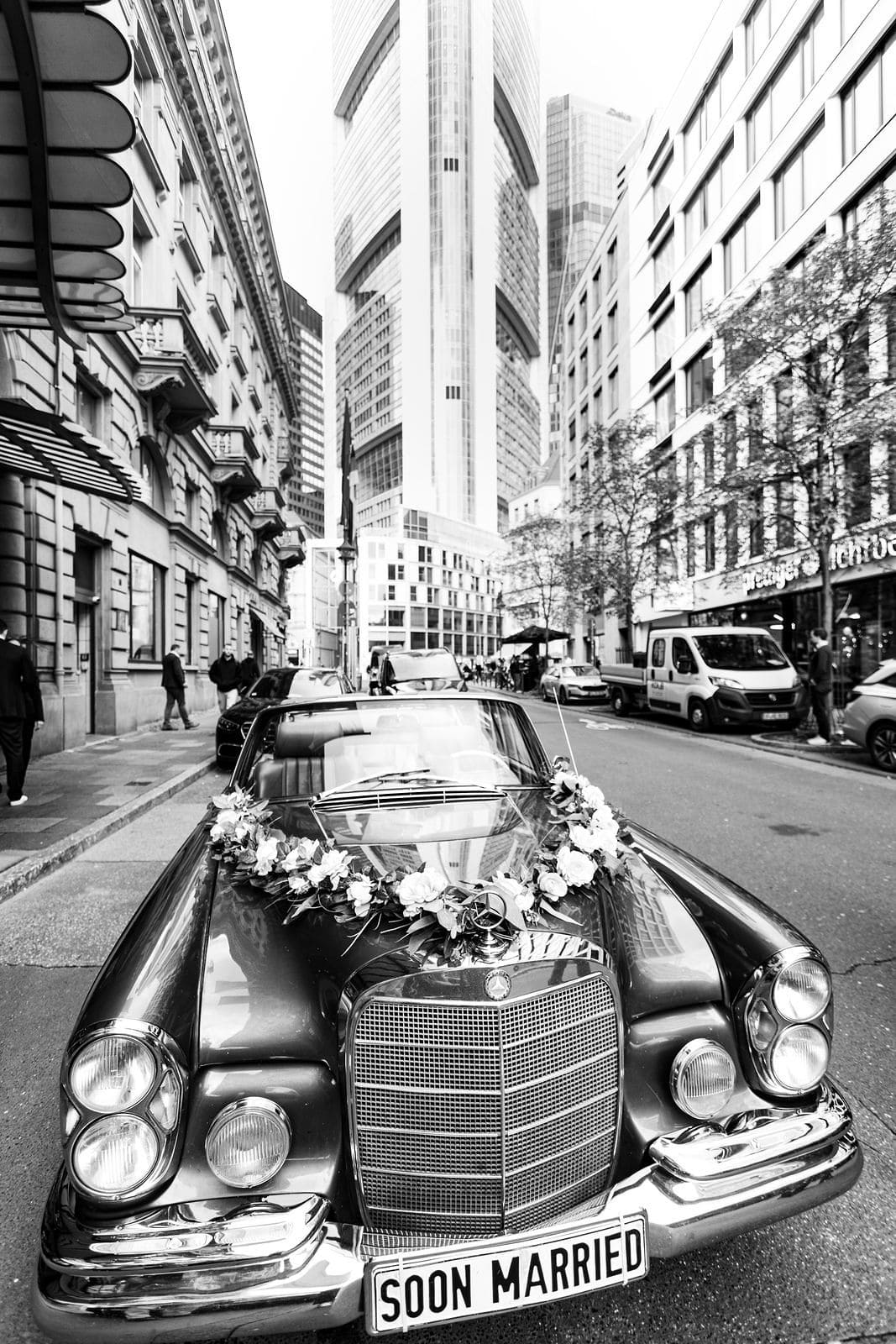
A very special moment was the The Bride's Brother's Surprise: He gave the couple a classic car, With which they were driven to the museum and back to the Frankfurter Hof after the civil wedding in Römer. A loving gesture that rounded off the day in such a personal way — classic, emotional and full of meaning.
This is how a wedding was created that Art, culture and love connected in the finest way — a celebration that didn't need loud words to be unforgettable.
Part 3: The wedding day — between structure, sensitivity and flowing harmony
Sepide and Behnam's wedding day began calmly and orderly. The room for dinner was prepared early in the morning in the Frankfurter Hof — with clear lines, harmonious proportions and a restrained world of colors. The bridal couple checked in, and while the stylist got to work in the bride's suite, I began the organizational coordination on site.
I arrived at the hotel around noon. I clarified the procedures with the service staff, asked the bridal couple's room number, checked blockages in the lobby, checked lighting conditions and routing — small but decisive points to make the day as a whole seamless.
Die florist brought the prepared arrangements to the hotel the day before. I did the set-up myself — white roses, complemented by pomegranates and grapes, carefully distributed across the tables. I controlled every detail: the position of the napkins, the orientation of the candle holders, the rhythm of the decoration in the room. It was the concentrated work before the start — precise, calm and supported by the awareness that something special would be created here.
At the same time, I brought the bridal bouquet to the bride's suite, organized the gifts and ensured that all service providers were seamlessly integrated into the process. This created an atmosphere of peace and security even before the actual celebration — exactly the basis that a successful wedding day needs.
At around 1:30pm, the band, photographer and classic car service arrived. I picked the newlyweds up from the room and accompanied them to their surprise: the vintage car, a gift from the bride's brother. It was a joyful moment — with laughter, enthusiasm and genuine anticipation of what was to come.
The couple then made their way to the Frankfurt Historical Museum together with the photographer and me. The preparation for this had already been carefully carried out days earlier: permits obtained, processes coordinated with the museum, contacts and approaches clarified. On the day itself, I confirmed our registration once again at the ticket office, while the couple began taking their first pictures outside.
Inside the museum, I made sure that all requirements were met throughout the shoot — no flash, enough distance from the works of art, respectful movement in space. I coordinated the process, agreed with the photographer when we would move to the next area, and always kept an eye on the time.
At the same time, I had to organize the scattered flowers that had been forgotten by the florist at short notice. I took care of the replenishment discreetly so that they were ready in time after the wedding — without the newlyweds knowing anything about it.
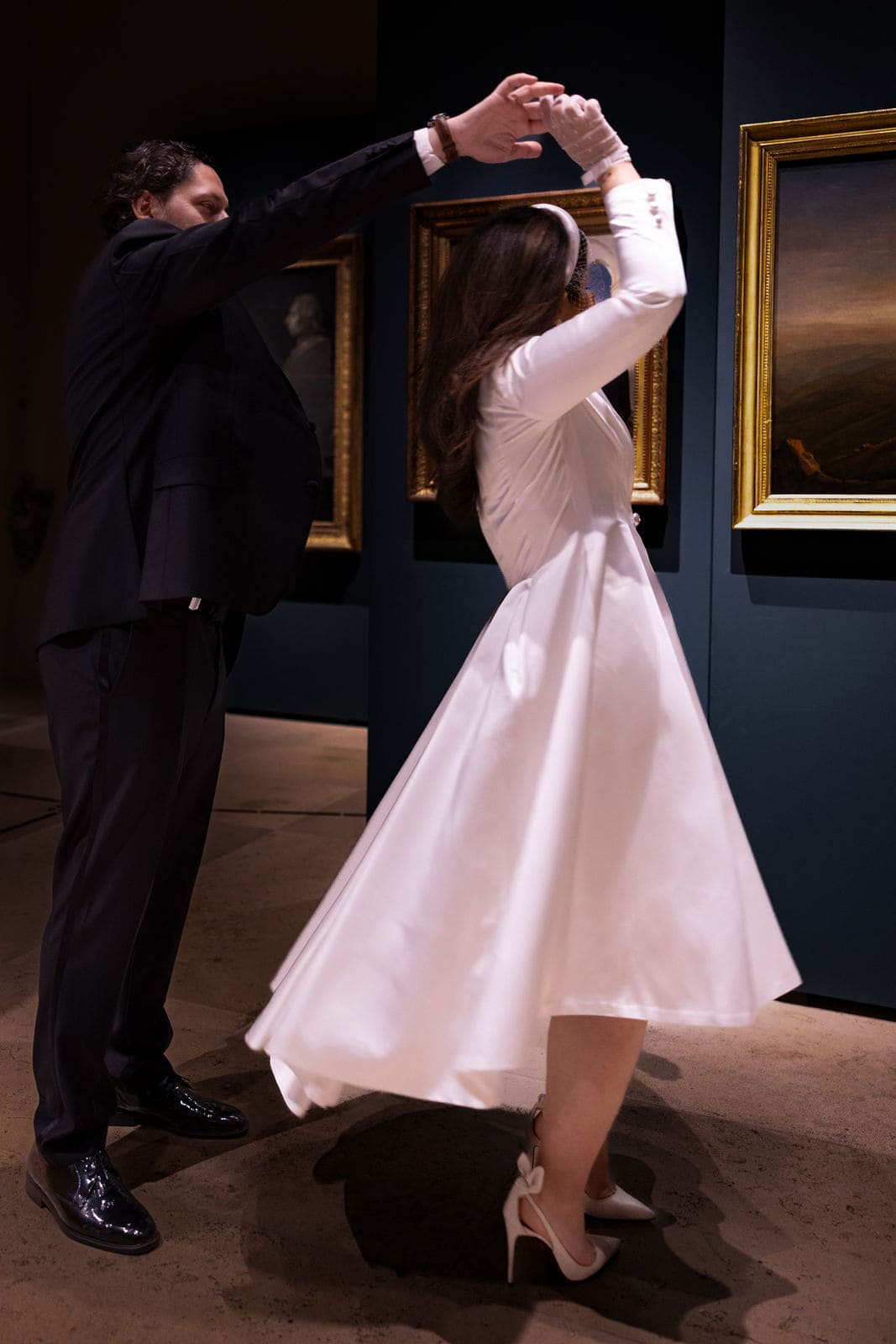
The result was an orderly interplay between planning, flexibility and mindfulness — and a series of images that perfectly captured the connection between art, architecture and emotion.
Shortly before 3:30pm, the wedding began in Römer. I was there to attend the translator's swearing-in, to have groomsmen's IDs ready and to receive guests who arrived later. In the background, I combined the processes — from the registry office to the hotel, from the band to the service.
The marriage was followed by congratulations and photos in front of the historic building. The classic car was ready and the guests were sprinkling flowers as the couple set off for Frankfurter Hof. I informed the band and the hotel about our departure, then accompanied the guests on foot and coordinated the arrival times of both groups.
The champagne reception began at the hotel with canapés and jazz music. The moment the bridal couple arrived was lively and heartfelt — accompanied by an Iranian song that referred to the origin of the two in a subtle way. While the guests were talking, I paid attention to the details: candles, lighting, service procedures, the right timing for the dinner.
At 18:00 I initiated the transition into the evening. The guests took their seats, the music switched to soft tones, and the menu began. The kitchen served four courses — precisely tailored to the evening's dramaturgy. The bridegroom gave a short, very personal and emotional speech. I stayed alert in the background, checked the schedule, coordinated the courses with the service and made sure that the transition between dinner and dessert went smoothly.
The cutting of the tiramisus marked the transition to the festive relaxed atmosphere of the evening. The band took over, the bar service began — an elegant, unobtrusive atmosphere in which the guests could enjoy the evening without anything being staged.
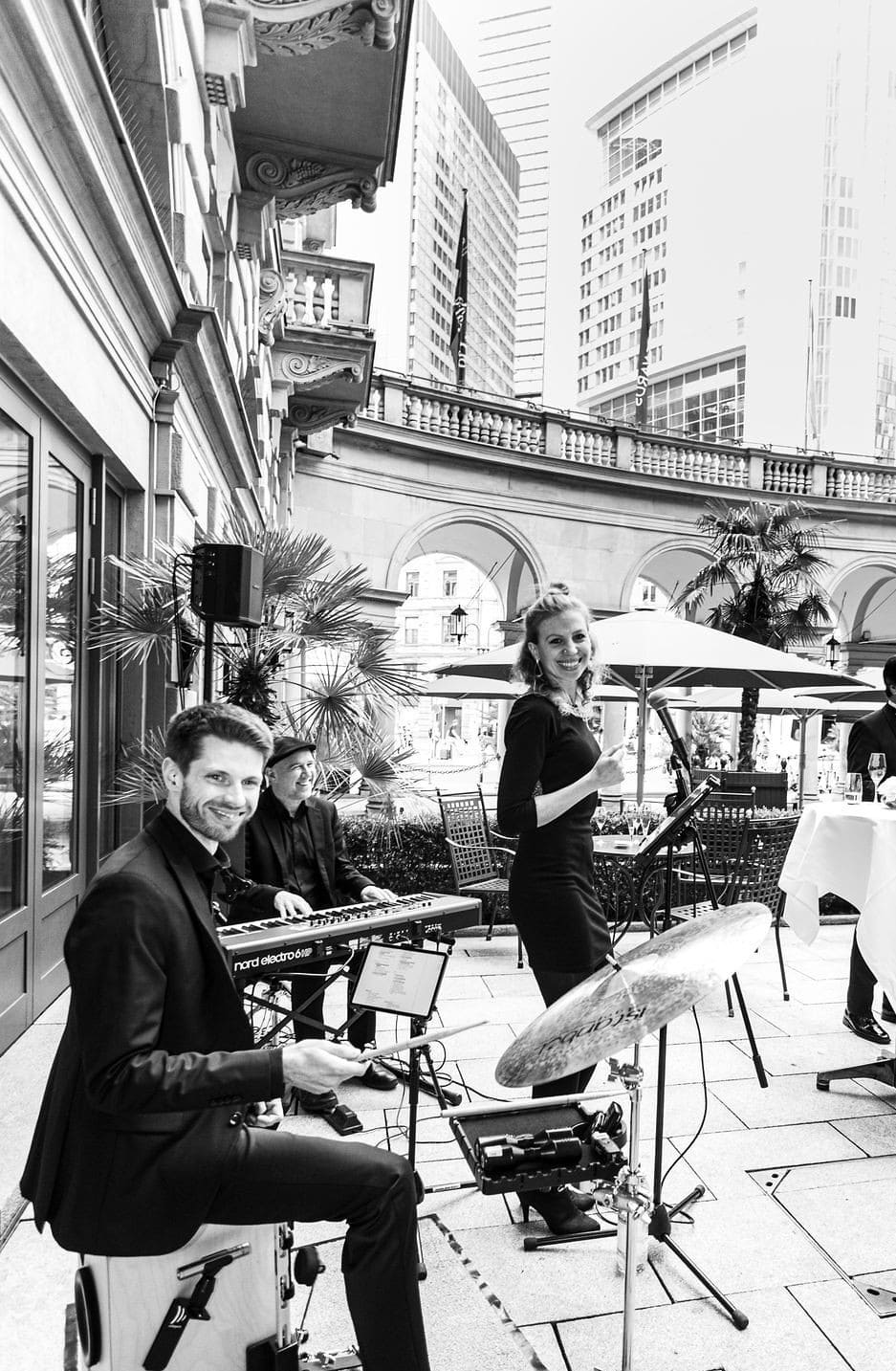
After the final vote, I said my goodbyes with the hotel team at around 10:30 p.m. The celebration continued — accompanied by music, conversations and a lightness that you can't plan but make possible through good preparation.
A day in which everything came together: organization and aesthetics, structure and feeling.
A wedding that is remembered for its peace, clarity and subtle expressiveness — in the spirit of Artiage.
conclusion
The wedding of Sepide & Behnam was in many ways exemplary of what artiage is: an interplay of aesthetics, clarity and human warmth.
Each moment was deliberately designed — not to stage, but to create space: for encounter, for emotion, for beauty in its quiet, honest form.
It was a celebration that showed that organization and art are not mutually exclusive, but mutually reinforce each other.
What remains is a day full of precision and ease — supported by trust, collaboration and the joy of having created something unique.
A temporary work of art that will be remembered — Just the way it should be.
Feel free to take a look at the Pictures of Sepide & Behnam's wedding in my gallery.