
Flowers for a museum wedding
September 28, 2026
Flowers for a museum wedding
Things to consider in floristry
For many couples, flowers are an essential part of their wedding design. Bridal bouquets, floral arrangements for the ceremony, or flowers on the dinner tables are planned, ordered, and set up at the venue on the wedding day.
However, anyone who wants to get married in a museum needs to think differently. A museum is primarily a cultural institution, not a traditional event venue. Protecting the artwork and collections always takes priority—and this can also impact your wedding florals.
Flowers at a museum wedding cannot simply be brought in and set up as a matter of course. You must coordinate with the specific museum in advance to determine what kind of floral arrangements are permitted.
Are you allowed to bring flowers into a museum?
There is no one-size-fits-all answer. Every museum sets its own guidelines for events held in its spaces.
Some museums allow fresh flowers for weddings. Others have specific requirements regarding which plants and materials may be brought into the exhibition rooms. And there are museums where fresh flowers are not permitted at all in certain areas.
That is why the question of florals should not be left until just before the wedding. Ideally, the museum's guidelines should be taken into account before the final floral design is developed.
As a wedding planner with experience in museum weddings, I clarify these parameters with the institution early on and then incorporate them into the planning and design of the wedding.
Why water can be a problem in a museum
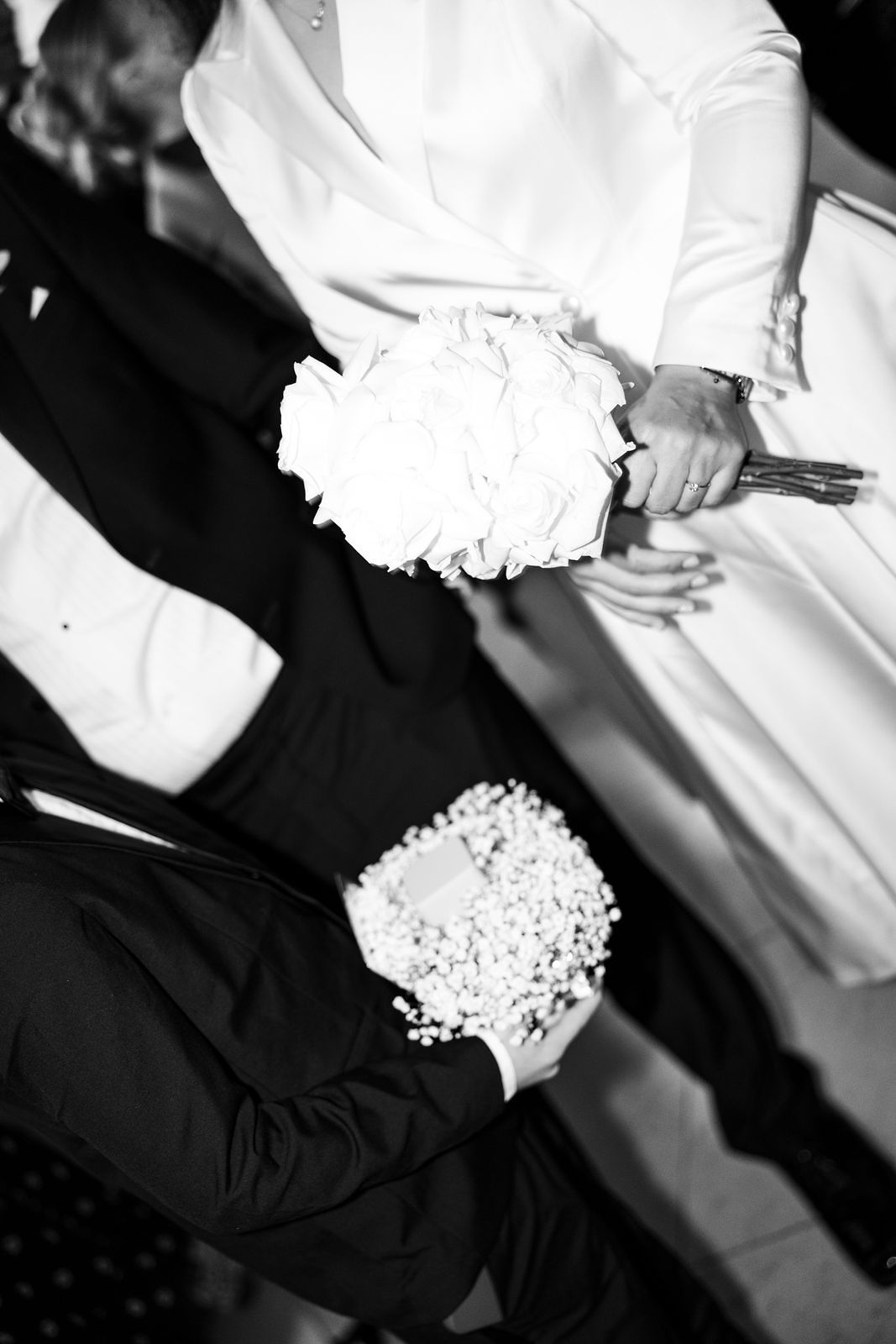
One of the most important considerations involves something that would rarely be questioned at a standard wedding venue: the water in the flower vases.
Museums may strictly limit or completely prohibit liquids near their collections. Water poses a potential risk to artwork, historic floors, and other sensitive components of a museum.
If fresh flowers are permitted, there may be a requirement, for example, that vases must be brought into the exhibition rooms without water.
For the planning of a museum wedding, such a requirement has immediate consequences.
The florist must know from the very beginning under what conditions they can work. At the same time, the setup must be planned accordingly: flowers that will be without water during the wedding should be placed in their final positions as late as possible.
What seems like a simple floral decoration thus becomes a matter of floristry, timing, and logistics.
Pollen, insects, and organic materials
It is not just water that can be a factor for a wedding in a museum. The flowers themselves can also be problematic from a conservation perspective.
Fresh plants, for example, can introduce pollen, soil, or insects into the exhibition rooms. Depending on the collection and conservation requirements, a museum may therefore exclude certain flowers and plants or forgo fresh floral arrangements entirely.
This does not mean that you have to forgo a special design.
Instead, the design must be adapted to the venue. Depending on the museum's guidelines, other materials, textile or sculptural elements, or alternative floral concepts can be used.
For me, this is exactly what makes a museum wedding so appealing: You don't just impose an existing wedding concept on a museum. The design emerges from the space itself and its possibilities.
Even the bridal bouquet may require approval
When planning, many people first think of large floral arrangements for the ceremony or the dinner. However, a museum's requirements can be much more extensive.
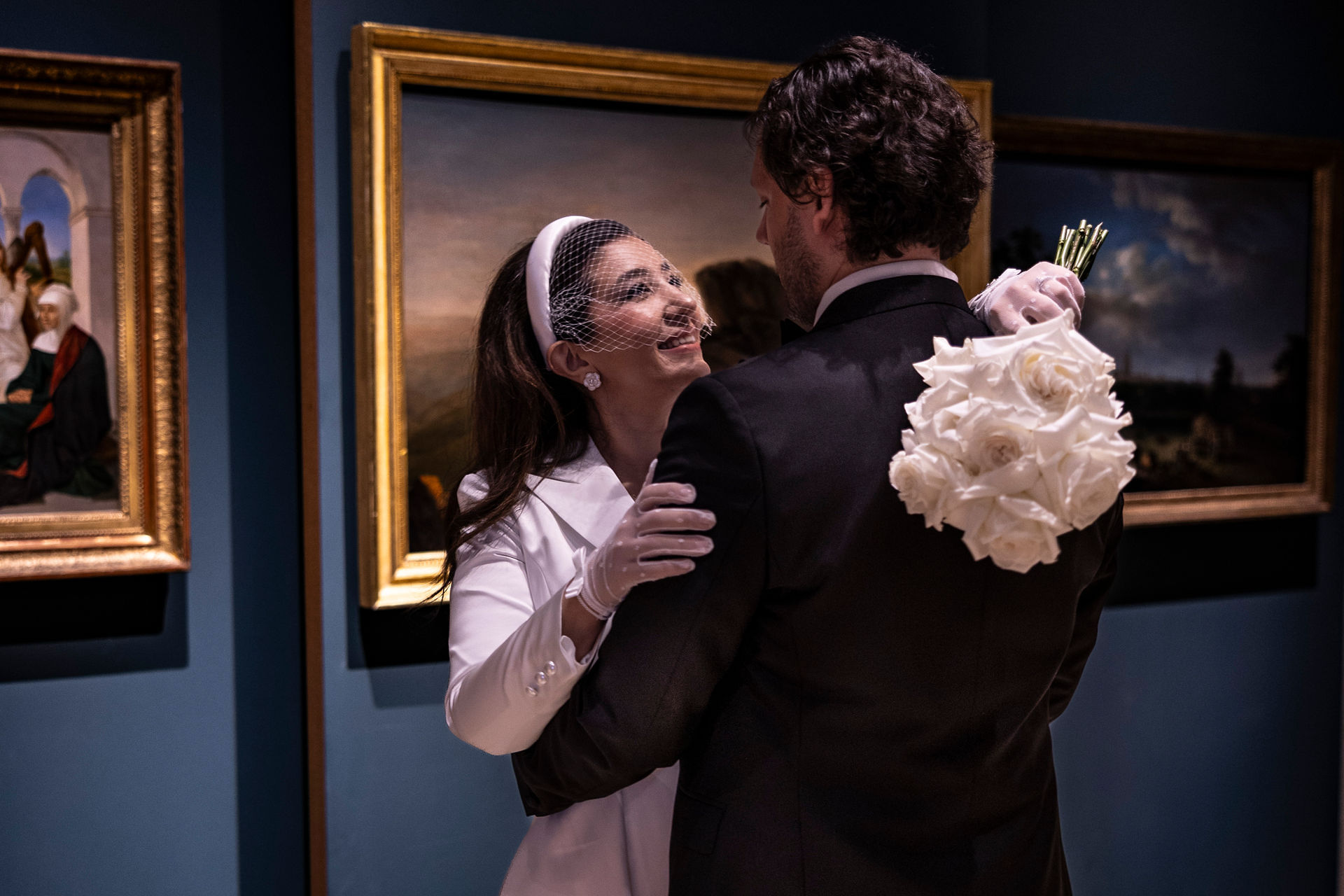
Even a bridal bouquet is ultimately fresh plant material being brought into a protected exhibition area.
If, for example, the couple's photo shoot is to take place in a museum after the civil ceremony and the bride wants to bring her bouquet, it should be clarified in advance whether this is permitted.
The same applies to boutonnieres, floral hair accessories, or other floral elements.
When planning a museum wedding, you shouldn't just ask: What floral decorations are we allowed to set up?
The real question is:
Which floral and organic materials are permitted in specific areas of the museum at all?
Setting up a museum wedding works differently
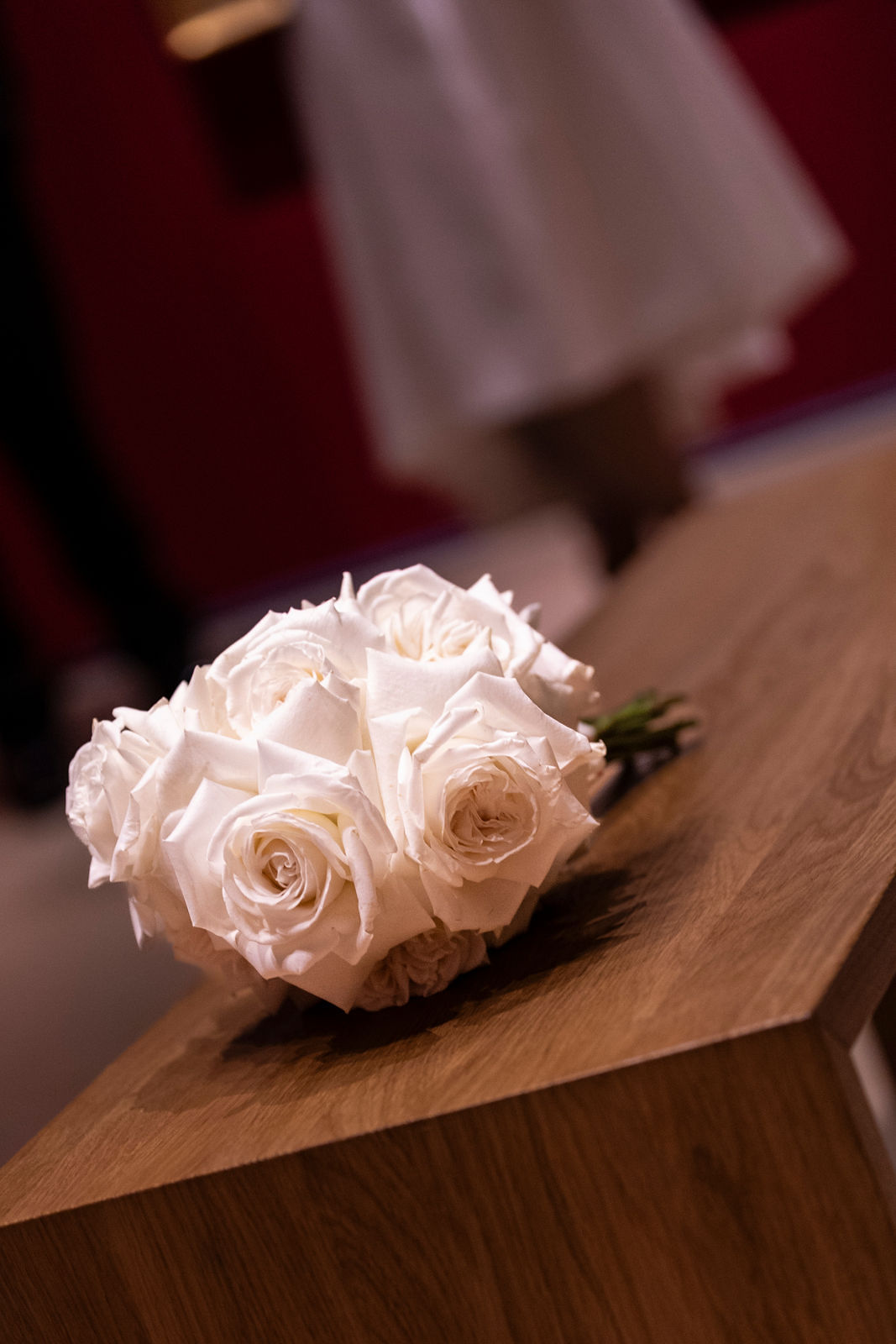
There is another factor to consider: the available setup times.
Many museums remain open to regular visitors on the day of the wedding. Consequently, event spaces can sometimes only be prepared after closing time. Even with more exclusive bookings, the museum's operational procedures dictate when service providers are granted access to certain rooms.
This can result in much tighter time windows for floristry and decoration than at a traditional wedding venue.
If, due to conservation requirements, flowers must also be brought into an exhibition space as late as possible and without water, the schedule must be planned with precision.
When do the flowers arrive? Where can they be prepared? When are they allowed into the exhibition space? Who handles the setup? How much time is actually available for this?
For me, such questions are just as much a part of planning a museum wedding as the design itself.
Floristry should not overshadow the art
Beyond the conservation requirements, a second aspect plays an important role for me: the aesthetic relationship between the floristry, the space, and the art.
Anyone getting married in a museum, has already chosen an extraordinary visual environment. Architecture, artwork, and exhibition spaces define the atmosphere of the wedding.
Floral design, therefore, does not need to try to outshine this effect.
A minimalist arrangement can have a much stronger impact in a room full of significant art than a large floral installation. Colors from a painting can be echoed, shapes can correspond with the architecture, or individual sculptural flowers can be used to set intentional accents.
For me, wedding design in a museum does not mean decorating an exhibition space as extensively as possible. It is about developing a design concept that works in harmony with the venue.
Why experience with museum weddings makes a difference
A museum wedding requires different planning in many areas compared to a wedding in a traditional event venue.
Floral design is just one example of this.
Photography, flash lighting, technical equipment, catering, beverages, candles, furniture, setup and teardown times, safety distances from artwork, and guest flow can all be subject to specific regulations.
A wedding planner for a museum wedding should therefore not only know the classic wedding procedures but also understand how cultural institutions operate.
With my background in cultural studies and arts and cultural management, as well as my professional experience in cultural institutions, I am familiar with both perspectives. At Artiage, I combine the planning and design of a wedding with the specific requirements of museums and cultural venues.
This includes asking the right questions early on, obtaining necessary permits, and briefing florists and other service providers so that the design can be implemented within the museum's guidelines.
Because getting married in a museum does not mean moving a classic wedding into an exhibition space.
It means planning the wedding specifically for this unique location.
FAQ: Flowers and floral design for a museum wedding
Are real flowers allowed at a museum wedding?
This depends on the specific museum and the rooms being used. Some museums allow fresh flowers under certain conditions, while others prohibit them in specific areas or entirely. You should therefore coordinate the requirements directly with the museum before finalizing your floral plans.
Why are flower vases sometimes not allowed to contain water in a museum?
Water can pose a risk to artworks, historic floors, and sensitive interiors. For this reason, museums may stipulate that while flowers are permitted, the vessels used within the exhibition spaces must not contain water.
Why might fresh flowers be prohibited in a museum?
In addition to water, pollen, insects, and other organic components can pose conservation risks. Which materials are permitted depends on the collection and the individual requirements of the respective museum.
Am I allowed to bring my bridal bouquet into the museum?
This should also be clarified in advance. A bridal bouquet consists of fresh plant material and may therefore be subject to the same conservation guidelines as other floral arrangements. You should obtain permission beforehand, especially if you are planning a couple's photoshoot in the exhibition rooms.
What are the alternatives if real flowers are not allowed?
This depends on the museum and the design concept. For example, textile or sculptural design elements, as well as other materials that harmonize with the space and the art, are possible options. Good wedding design should not just circumvent the restrictions, but rather develop a creative solution tailored to the specific venue.
Can the floral arrangements for a museum wedding be set up the day before?
This is often not possible and depends entirely on the museum's operations. Setup times can be very limited, especially in exhibition spaces that are open to the public. Therefore, floral arrangements, service providers, and the schedule should be coordinated with the available time slots well in advance.
Why is it helpful to have a wedding planner with museum experience?
A museum wedding requires balancing standard wedding logistics with numerous institutional and conservation requirements. A wedding planner with relevant experience can clarify guidelines with the museum early on, coordinate necessary permits, and brief service providers accordingly. This ensures that the design and schedule are developed within the museum's actual capabilities from the very beginning.
Is it generally possible to get married in a museum?
Yes, various museums offer opportunities for civil or symbolic ceremonies, receptions, dinners, or other parts of a wedding. However, what is specifically possible varies significantly from one venue to another. Opening hours, collection protection, room capacities, and event guidelines all play an important role.


