
Italian Weddings vs. North American Weddings
July 28, 2026
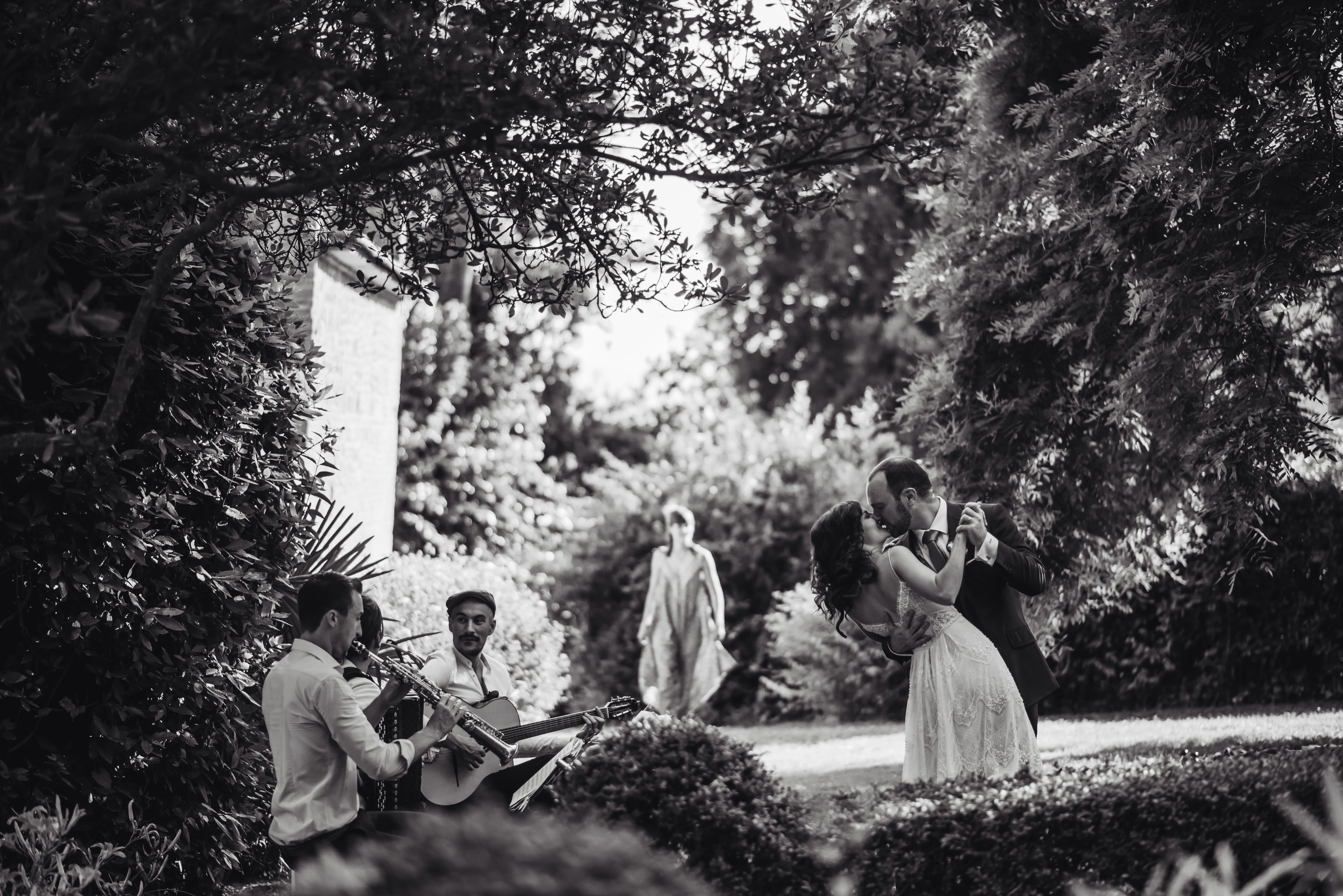
Italian Weddings vs. North American Weddings
A Guide to Destination Weddings in Italy
A wedding in Italy is about so much more than just choosing a dream location. It means immersing yourself in a different wedding culture—one defined by hospitality, exceptional cuisine, a relaxed pace, and unforgettable shared moments.
Many couples from Canada or the USA arrive with expectations shaped by North American weddings. There is nothing wrong with that, but Italian weddings often follow a completely different rhythm. Understanding these cultural nuances early on allows you to plan a celebration that feels authentically Italian while still reflecting your own personality.
Here are the most important differences international couples should know before getting married in Italy.
1. Welcome Dinner instead of Rehearsal Dinner
In Canada and the USA, the rehearsal dinner is often a standard part of the wedding experience. After rehearsing the ceremony, the couple, their families, and their closest friends gather for dinner. It is common to give initial speeches, exchange gifts, or thank the wedding party and parents for their support. The rehearsal dinner is usually intimate and limited to a smaller group.
In Italy, the approach is a little different.
Since guests at a destination wedding often travel from various countries and spend several days together, many couples choose to host a welcome dinner or a welcome partyinstead. This is less about a formal agenda and more about warmly welcoming all your guests and starting the trip on a relaxed note.
Instead of a rigid schedule, the focus is on togetherness and the Italian way of life. Guests get to know one another, strike up conversations over a glass of local wine, and enjoy the first few hours of the wedding weekend together. Because many families and friend groups may be meeting for the first time, this evening creates a casual, personal atmosphere that sets the tone for the entire weekend.
The welcome dinner also offers a culinary opportunity to explore the region. Depending on the location, it can be a unique experience: a casual pizza night at a traditional masseria in Puglia, a Mediterranean dinner overlooking the sea in Sicily, a long table set among vineyards in Tuscany, or a stylish evening in a historic courtyard.
Many couples intentionally forgo elaborate decor or a fixed program. Instead, candlelight, regional specialties, Italian music, and great conversation create the exact atmosphere that makes destination weddings in Italy so cherished.
For many guests, the welcome dinner becomes much more than just a meal. It is the moment when individual groups of travelers become a community—and it is often one of the most beautiful and personal highlights of the entire wedding weekend.
2. Italian weddings start later
One of the biggest surprises for international couples is the timeline of an Italian wedding. While weddings in North America often begin in the early afternoon, a wedding in Italy—especially between May and September—usually doesn't start until around 4 or 5 p.m..
The reason for this is not just the warm Mediterranean climate, but also the way celebrations are held in Italy. The heat of the midday sun is intentionally avoided, allowing both the couple and their guests to start the day in a relaxed manner.
Instead of rushing from one scheduled event to the next from early in the morning, there is plenty of time to enjoy the destination. Many guests spend the morning by the pool at their masseria or villa, take a stroll through a historic village, explore the surroundings, or simply relax with a cappuccino on the terrace. This also creates a much calmer start to the wedding day for the couple. Hair and makeup can be done without feeling rushed, leaving space to truly experience the special day.
Another advantage is the light. While the midday sun in Italy is often very intense, the later start ensures more comfortable temperatures and soft, warm light—ideal conditions for the ceremony and wedding photography. The hours just before sunset, known as the golden hour, create an incomparable atmosphere and are among the most beautiful moments for couple portraits.
The later start creates a very natural flow to the day. The ceremony is followed by an extended aperitivo outdoors, after which guests enjoy a multi-course dinner before the sunset provides the perfect backdrop for more photos. Only then does the party begin—often under string lights, among olive trees, or in the courtyards of historic villas.
It is precisely this relaxed pacing that distinguishes Italian weddings from many North American celebrations. The day feels less regimented and instead unfolds quite naturally from one special moment to the next. This creates an atmosphere that is simultaneously elegant, informal, and quintessentially Italian.

3. The aperitivo is much more than a cocktail hour
Anyone who has been to a wedding in Canada or the US is familiar with the classic cocktail hour. After the ceremony, guests enjoy a drink and small snacks while the couple disappears for wedding photos. After about an hour, it is usually time for dinner.
In Italy, this part of the program has a completely different significance.
The aperitivo is far more than just a small reception before dinner—it is an integral part of Italian food culture and, for many guests, one of the highlights of the entire wedding day.
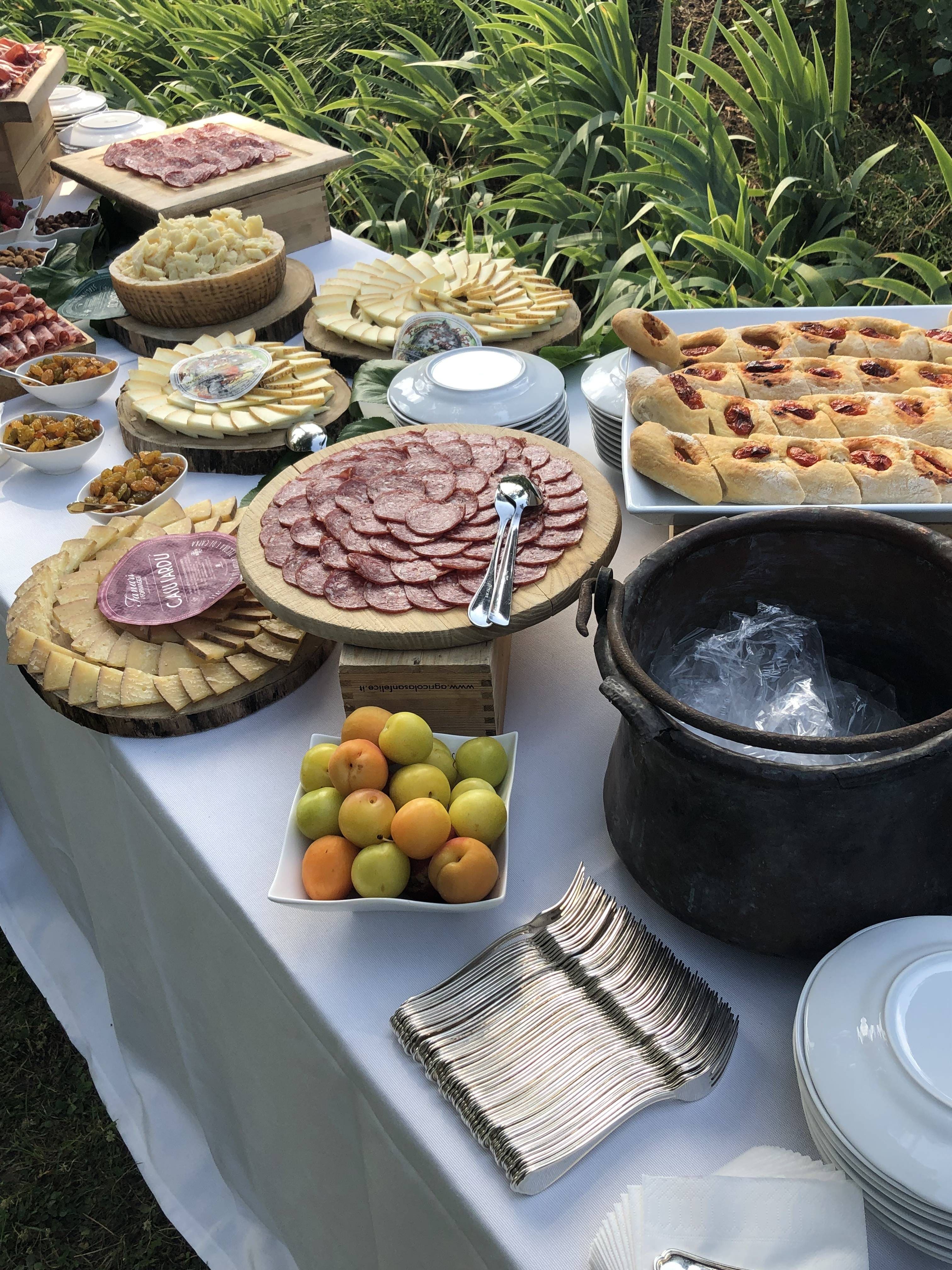
After the ceremony, all the guests gather in a relaxed atmosphere to toast the couple with a glass of Prosecco, Aperol Spritz, or a regional wine, while enjoying an impressive selection of freshly prepared specialties. Often, long tables or stylishly arranged food stations are set up where guests can help themselves.
Depending on the region, you can expect, among other things:
- a variety of regional cheeses
- antipasti with grilled vegetables and pickled delicacies
- prosciutto, salami, and other Italian cured meats
- fresh fish and seafood
- homemade focaccia and crusty bread
- seasonal fruit and vegetables
- freshly prepared pasta or risotto stations
- live cooking stations featuring regional specialties
- regional wines as well as classic Italian aperitifs and cocktails
The aperitivo is not just a culinary highlight, but also a social hub. Unlike many North American weddings, the couple often doesn't disappear immediately for a long photo session; instead, they spend time with their guests, toast together, and enjoy the relaxed atmosphere. Many couples only step away later for a short portrait session during the golden hour.
It is precisely this relaxed approach that contributes significantly to the unique character of Italian weddings. No one feels like they are waiting for dinner—rather, the culinary experience begins immediately after the ceremony.
It is not uncommon for the aperitivo to be so generous that international guests are surprised by the variety and quality of the selection. For many, it is therefore one of the absolute highlights of the day, conveying in the very first hours what Italy is known for worldwide: excellent cuisine, hospitality, and the art of enjoying life together.

4. Dinner is one of the highlights of the day
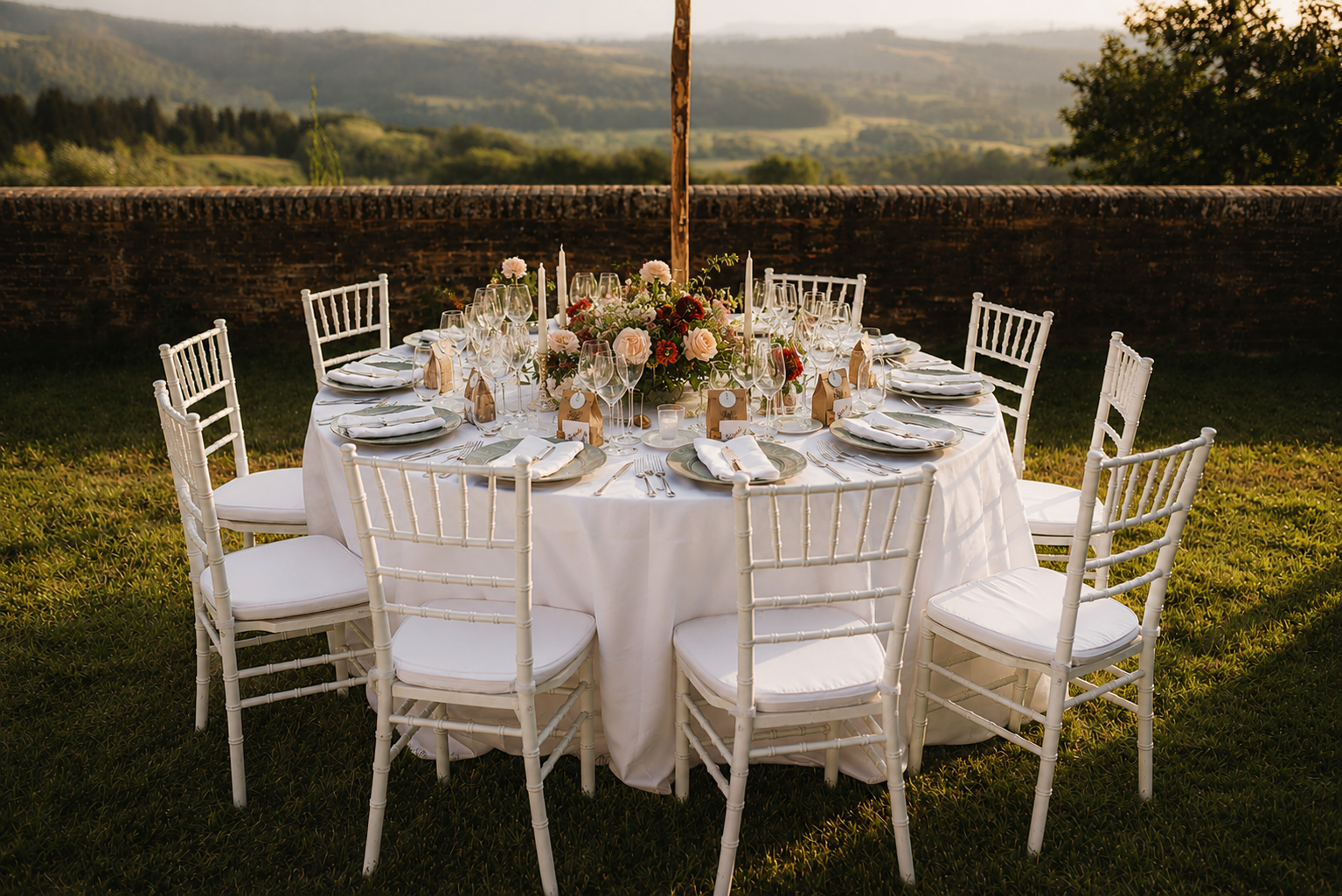
While dinner at many North American weddings often serves as the transition between the ceremony and the party, in Italy, it is a central component of the entire celebration.
Dining together is not viewed as a scheduled item to be completed as quickly as possible. Instead, it is a moment to be savored intentionally.
Over the course of several hours, various courses are served—accompanied by good conversation, laughter, and glasses of wine raised in toasts. There is plenty of time between courses to chat with guests, give speeches, or simply enjoy the special atmosphere.
It is this relaxed way of celebrating that makes Italian weddings so unique. No one is constantly checking the clock or waiting for the next item on the agenda to begin. Instead, the shared experience is the focus.
For many international couples, this is exactly one of the most beautiful experiences of a wedding in Italy: the celebration feels less like a tightly scheduled event and more like a long, stylish dinner with the most important people in your life.
Italian cuisine plays a decisive role in creating this atmosphere. Fresh, regional ingredients, several lovingly prepared courses, and excellent wines turn the meal into an experience that guests often remember long after the wedding. It is not just about getting full—it is about enjoying life together.
This unique culinary culture is one of the reasons why many couples choose a destination wedding in Italy. Here, dinner isn't just squeezed in between the ceremony and the party – it is an essential part of the celebration and plays a major role in making the entire wedding day feel relaxed, elegant, and extraordinary.
5. The couple doesn't disappear for hours for photos
At many weddings in Canada and the US, the couple leaves their guests immediately after the ceremony for an extended photo session. Meanwhile, the guests enjoy the cocktail hour before the couple returns later with a grand entrance for dinner.
In Italy, this part of the wedding day is usually much more relaxed.
After the ceremony, many couples stay with their guests. Everyone toasts to the wedding, enjoys the aperitivo, chats, and consciously takes time for family and friends. Especially at a destination wedding, where guests often travel from different countries and spend several days together, many couples particularly value this informal time.
For wedding photos, a short break of about 20 to 30 minutes is often enough. Afterward, the couple returns to their guests and spends the rest of the aperitivo with them.
Additional portraits are often taken later in the evening during the golden hour, when the sun is slowly setting and the light becomes particularly soft and warm. Photographers consider this the best time of day for wedding portraits. At the same time, the couple doesn't have to miss out on their guests for a long period right after the ceremony.
This relaxed flow makes the wedding feel more natural. The couple experiences the aperitivo together with their guests instead of feeling like they are missing an important part of the celebration. At the same time, beautiful, atmospheric shots are captured in the evening hours – often with a backdrop of vineyards, olive groves, or the sea in the sunset light.
For many international couples, this balance is one of the biggest advantages of a wedding in Italy: they don't have to choose between unforgettable photos and valuable time with their guests – both can be harmoniously combined.
6. The Millefoglie is an experience
When people think of a wedding cake, they often imagine a multi-tiered fondant or buttercream cake. In Italy, however, many couples opt for a completely different tradition: the Millefoglie.
The Millefoglie – meaning "thousand leaves" – is a classic Italian dessert made of crispy puff pastry, airy Chantilly cream, and fresh berries. Depending on the region, pistachios, chocolate shavings, or seasonal fruits are also added. It feels light, elegant, and is a perfect fit for a summer wedding in Italy.
The special thing, however, is not just the cake itself, but the way it is served.
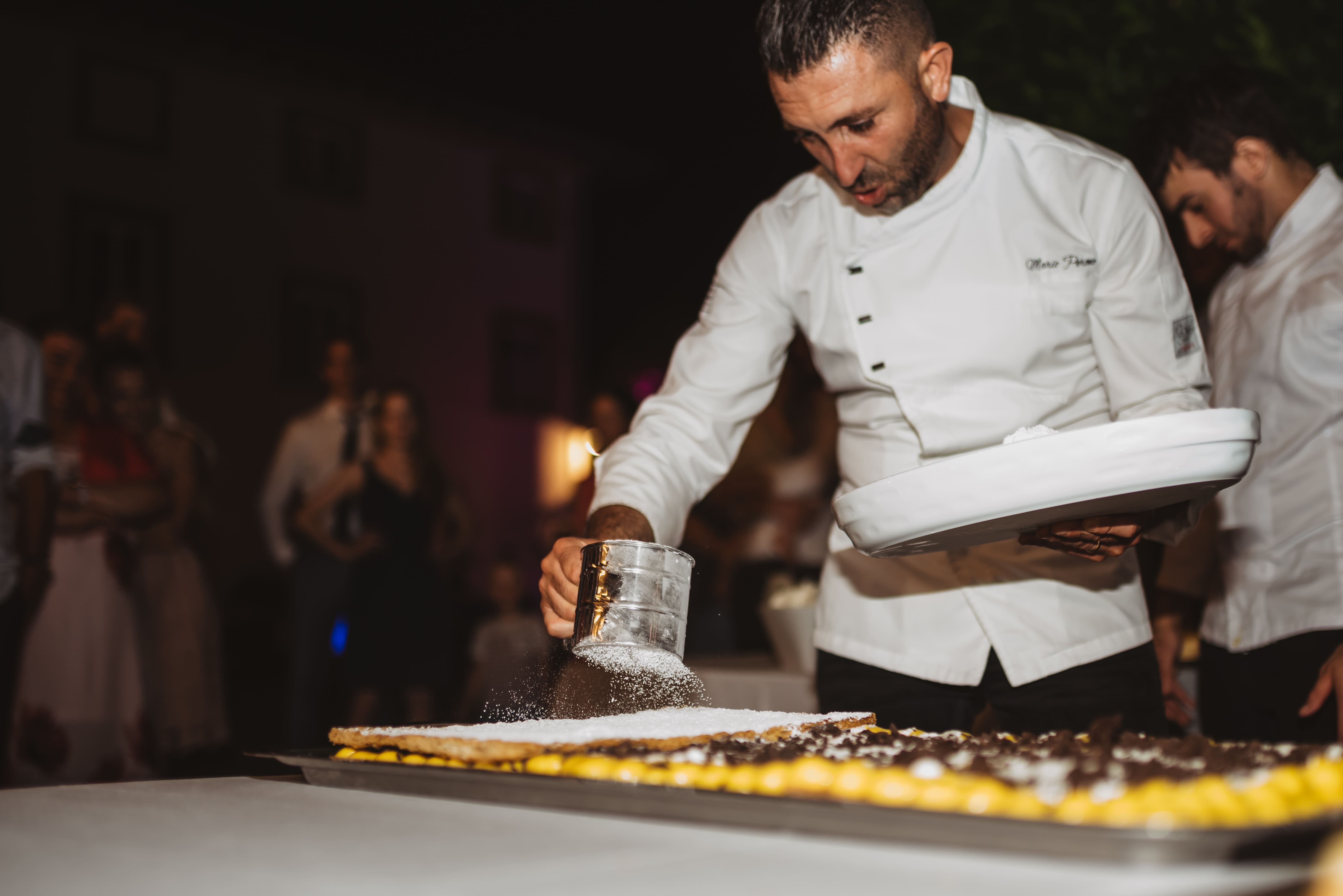
Unlike a pre-decorated wedding cake, the millefoglie is often assembled fresh in front of the guests in the evening. The pastry chef layers the crispy puff pastry with cream, decorates the cake with fresh berries, and often puts the finishing touches on it right in front of the wedding party. Many couples even pick up the piping bag themselves or help distribute the berries and powdered sugar. This turns the preparation into a shared experience, creating many authentic and emotional moments.
Once the millefoglie is finished, it is cut together and served to the guests. This moment is often accompanied by music, sparklers, or a glass of spumante, marking another highlight of the evening before the party begins.
For international guests in particular, this tradition is often a special surprise. The wedding cake is not just a brief item on the agenda for photos, but a culinary experience that everyone watches together. At the same time, the millefoglie perfectly reflects what Italian weddings stand for: high-quality ingredients, craftsmanship, and the joy of enjoying special moments together.
Many international couples therefore consciously choose a millefoglie – not just for its taste, but because it adds an authentic Italian touch to their wedding and becomes one of the memories that guests will talk about long after the celebration.
7. A midnight snack is often not even necessary
At many weddings in Canada and the USA, a late-night snack is a natural part of the evening's schedule. After several hours on the dance floor, mini-burgers, fries, tacos, pizza, or other savory snacks are often served so that guests can recharge their energy for the party.
In Italy, things are usually quite different.
The reason is simple: the culinary experience begins shortly after the ceremony and continues throughout the entire evening. Even during the aperitivo, guests are treated to a large selection of regional specialties before a multi-course dinner with appetizers, pasta, a main course, and dessert is served. Later, the traditional millefoglie or another dessert buffet often follows.
After such an extensive menu, most guests are already pleasantly full. An additional midnight snack is therefore often not required and is not part of the classic flow of many Italian weddings.
Of course, there are exceptions here too. Those who want to round off the evening with another culinary highlight can offer their guests, for example, freshly baked pizza from a wood-fired oven, a gelato bar, Sicilian cannoli, or regional sweets. Especially for weddings that are celebrated late into the night, this can be a lovely extra.
Nevertheless, many couples consciously decide against it. Instead of planning more and more program items or food, they focus on quality over quantity. The carefully curated menu takes center stage and already offers guests everything that defines an Italian wedding: excellent cuisine, regional specialties, and enjoying time together without rushing.
For international couples, this is often a pleasant surprise. They realize that they do not need to plan an additional late-night snack to satisfy their guests. The budget can instead be invested in other highlights – such as an extraordinary aperitivo, excellent wines, or a high-quality dinner that guests will remember for a long time.
8. Music cannot be played late into the night everywhere
There are also some differences between weddings in North America and Italy regarding music that international couples should be aware of when planning.
While many wedding venues in Canada or the USA are allowed to celebrate late into the night or even into the early morning hours, stricter regulations often apply in Italy. Many villas, masserias, and historic estates are subject to local noise control ordinances. Depending on the region and the location of the venue, loud music must therefore be turned off by around midnight or at the latest by 1 a.m. . Venues near residential areas or in historic town centers are particularly affected by these regulations.
However, this does not mean that Italian weddings have to end early. Many couples simply move indoors after the official party ends or continue celebrating at a lower volume. Others consciously choose a secluded villa or an exclusive venue where longer party hours are possible. Anyone who wants to dance until the early hours of the morning should therefore address this topic during the venue search and not just shortly before the wedding.
Another point that often surprises international couples is the so-called SIAE fee. The SIAE (Italian Society of Authors and Publishers) is the Italian copyright collection agency—comparable to GEMA in Germany, SOCAN in Canada, or ASCAP and BMI in the United States.
Whenever copyrighted music is played in public at a wedding—regardless of whether you use a DJ, a live band, or a playlist—a license is required in most cases. This incurs a SIAE fee, which can vary depending on the type of event and the musical program.
Many international couples are initially unaware of this additional cost. Therefore, the SIAE fee should be factored into the budget from the very beginning. An experienced wedding planner usually handles the organization or coordinates with the DJ, band, and venue to ensure all necessary permits are obtained in time.
Especially for a destination wedding in Italy, it is worth asking about the applicable music regulations before booking a venue. This helps avoid unpleasant surprises and allows the daily schedule to be perfectly tailored to local conditions.
Even if Italian weddings often end a bit earlier than North American celebrations, they lose none of their special atmosphere. The later start to the wedding day, the extended aperitivo, the long dinner, and the atmospheric party under the open sky create a celebration defined not by the number of hours on the dance floor, but by the unique quality of every single moment.
9. Shuttle service is almost always a must
Another difference that many international couples initially underestimate concerns the arrival and departure of their guests. While taxis and ride-sharing services like Uber are available almost anytime in many Canadian or US cities, the situation is quite different in many popular wedding regions in Italy.
The most beautiful wedding venues are often located far from major cities—nestled among vineyards, olive groves, or overlooking the sea. Whether it’s a historic masseria in Puglia, a winery in Tuscany, a villa in Sicily, or a country estate in Umbria: the secluded location contributes significantly to the special charm of these places, but it also brings logistical challenges.
Taxis are often available only in very limited numbers or must be booked long in advance. Ride-sharing services like Uber or Lyft are often unavailable outside of larger cities. At the same time, most guests want to enjoy the evening carefree, sample regional wines, and return safely to their accommodation afterward without having to drive themselves.
For this reason, a shuttle service is one of the most important organizational components for many destination weddings in Italy—not just an optional extra.
A well-planned shuttle ensures that all guests can travel comfortably between their hotel or vacation rental and the wedding venue. No one has to worry about parking, unfamiliar country roads, or getting home after the party. This provides a high level of comfort and safety, especially for international guests who are not familiar with the area.
For the couple, a shuttle service also means significantly less organizational effort. There is no need to coordinate individual trips or organize spontaneous taxi bookings. Instead, guests arrive together, experience the day in a relaxed manner, and depart just as easily after the celebration.
Especially when accommodations are spread across several hotels, vacation homes, or agriturismi, a wedding planner often develops a custom shuttle concept with different routes and fixed departure times. This allows even larger guest lists to be coordinated efficiently and stress-free.
Many international couples initially do not budget for a shuttle. In practice, however, it consistently proves that this investment makes a significant contribution to the smooth running of the wedding day. It not only increases guest comfort but also ensures that everyone can enjoy the evening carefree—an important component of a relaxed and successful destination wedding in Italy.
10. A destination wedding is more than just a wedding day
Perhaps this is the biggest difference between a wedding in Italy and many weddings in Canada or the US: a destination wedding is rarely just a single day.
Instead, the wedding becomes a shared experience that spans several days. Since family and friends often travel from different countries and make a conscious effort to journey to Italy, many couples want to spend as much time as possible with their guests. For this reason, the wedding often turns into an entire wedding weekend – or even a multi-day celebration.
Instead of seeing each other for only a few hours on the wedding day, the couple and their guests experience several days together filled with special moments. This creates opportunities for connection that often don't exist in everyday life. Families get to know each other better, circles of friends grow closer, and a guest list turns into a community.
Many couples therefore supplement their wedding day with additional events, such as a relaxed welcome dinner on the day of arrival, a wine tasting at a local vineyard, a pizza night at a traditional masseria, a group beach day, or a pasta-making class where everyone prepares Italian specialties together. The weekend often concludes with a farewell brunch, allowing everyone to say goodbye in a relaxed atmosphere.
These additional program items are by no means mandatory. Rather, they give guests the opportunity to get to know the region and spend time together – without the time pressure of a classic wedding day. Often, it is these casual moments between the official events that guests remember most fondly: a glass of wine at sunset, long conversations under olive trees, or a shared dinner at a long table under the open sky.
For international couples, this concept offers another advantage. Since friends and family often travel a long way, the wedding doesn't feel like a single event, but rather a shared short vacation with the most important people in their lives. Guests experience not only the ceremony but also the culture, the landscape, and the Italian way of life.
This is exactly why so many couples choose a destination wedding in Italy. They want more than just a beautiful backdrop for their wedding; they want an experience that brings people together and creates memories that extend far beyond the wedding day itself. Instead of just celebrating for a few hours, an entire weekend full of enjoyment, connection, and unforgettable moments is created – and that is exactly what makes a wedding in Italy so special.
Combining the best of both worlds
The beauty of a destination wedding in Italy is that you don't have to choose between North American and Italian traditions.
The most beautiful weddings often happen when both worlds are combined.
Perhaps you want to incorporate the emotional first look, personal vows, or a father-daughter first look from North America. At the same time, you may want the relaxed atmosphere of an Italian wedding – an extended aperitivo, a long dinner under the open sky, regional cuisine, and the special zest for life for which Italy is known worldwide.
It is precisely this combination that makes a destination wedding so unique. It is not about replacing traditions, but about combining them in a way that suits you, your story, and your guests.
As a wedding planner for international weddings in Italy, I guide couples on this very journey. I understand both perspectives. I know the expectations many international – especially North American – couples have for their wedding day and which traditions are important to them. At the same time, I am familiar with the nuances of Italian weddings, work closely with local vendors, and know how weddings in Italy are actually planned and celebrated.
This connection is crucial. A destination wedding should neither feel like a copied North American wedding in an Italian setting, nor should your own traditions be lost. Instead, the result is a celebration that unites the best of both cultures: the emotionality and personal touch of North American weddings with the serenity, culinary delights, and hospitality of Italy.
With my experience in planning destination weddings in Italy, I don't just help you choose the perfect region and venue; I also guide you in discovering Italian traditions and integrating them into your wedding day in a way that feels natural and authentic. This ensures your wedding isn't just a "cookie-cutter" event, but a celebration that reflects your personality while bringing the magic of Italy to life.
Because in the end, it’s not about following a specific tradition. It’s about creating a wedding that feels right for you—and one that your guests will remember long after their trip to Italy.
A wedding that’s uniquely yours
Every couple brings their own story, their own traditions, and their own vision.
That’s why planning a destination wedding isn't about simply adopting Italian traditions. Instead, it’s about creating a celebration that reflects your personality while capturing the true spirit of Italy.
At Artiage Weddings I guide international couples through this journey—from selecting the perfect venue and coordinating with local vendors to designing a wedding weekend that feels authentic, personal, and effortless.
Because the most beautiful weddings in Italy are about more than just the scenery. They create memories that will stay with you and your guests for years to come.
FAQ – Destination Weddings in Italy for International Couples
Do I have to include all Italian wedding traditions?
No. The beauty of a destination wedding in Italy is that you can combine your own traditions with Italian elements. Many international couples, for example, choose to include personal vows or a first look, while also incorporating an Italian aperitivo, a millefoglie cake, or a multi-course dinner under the stars.
What time do weddings in Italy usually start?
Especially between May and September, many weddings don't start until late afternoon—often around 4 or 5 PM. This avoids the heat of midday and ensures the ceremony takes place in more comfortable temperatures with beautiful lighting. The day then flows naturally from the ceremony to the aperitivo, dinner, and the party.
Is a welcome dinner common in Italy?
Yes. For destination weddings in Italy, a welcome dinner or party is often a key part of the wedding weekend. Since guests are frequently traveling from different countries, this evening is the perfect opportunity to welcome everyone and kick off the celebrations in a relaxed atmosphere.
What is a millefoglie?
The millefoglie is a traditional Italian wedding cake made of crispy puff pastry, Chantilly cream, and fresh berries. It is often assembled fresh in front of the guests in the evening and is one of the most popular wedding traditions in Italy.
Why is there often no late-night snack in Italy?
Since Italian weddings begin with a generous aperitivo, followed by several courses, dessert, and millefoglie, most guests are already comfortably full. A late-night snack is therefore usually unnecessary, though it can certainly be planned as an additional highlight.
Can we party until the early hours of the morning?
That depends on the venue. Many wedding venues in Italy are subject to local noise regulations, meaning loud music often has to stop around midnight or by 1 a.m. at the latest. If you want to party longer, you should take this into account when choosing your wedding venue.
What is the SIAE fee?
SIAE is the Italian society for copyright management. In most cases, a licensing fee applies for the public performance of copyrighted music, such as by a DJ or a live band. These costs should be included in the budget planning for a destination wedding in Italy.
Do we need a shuttle service?
In many regions of Italy, the answer is yes. Numerous exclusive wedding venues are located outside of larger towns, where taxis or ride-sharing services are limited. A shuttle service ensures that your guests can travel safely and comfortably between their accommodation and the wedding venue.
How many days should we plan for a destination wedding in Italy?
Many couples plan for at least three to four days. In addition to the wedding day, the program often includes a welcome dinner, group activities like wine tasting or a pasta-making class, and a farewell brunch. This turns the wedding into an unforgettable experience for all guests.
Can we combine North American traditions with Italian wedding traditions?
Absolutely. In fact, the most beautiful destination weddings often come from blending both cultures. Many couples, for example, combine a first look or personal vows with an Italian aperitivo, a long dinner, and a traditional millefoglie. This creates a wedding that reflects both your personality and the Italian way of life.
Why is it worth working with a wedding planner for Italy?
A destination wedding in Italy involves some unique aspects—from regional traditions and legal requirements to logistics, music regulations, and communication with local vendors. A wedding planner with experience in Italy knows these nuances, recommends the right regions and venues, and ensures that your wedding is perfectly tailored to you, both organizationally and culturally. For international couples in particular, this means a much more relaxed planning process and the assurance that Italian traditions can be authentically integrated into the wedding day.
Photographer: Marco Vegni


