Wedding speakers for artful weddings and weddings in the museum
February 10, 2026

Wedding speakers for artful weddings and weddings in the museum
Why choosing the right voice is crucial
A wedding in a museum is no ordinary place for a wedding. It is calm, meaningful, architecturally influenced — and requires a ceremony that does justice to this setting.
Especially at an artistic wedding, it becomes clear that it is not only the location, but also the language that determines whether the moment is touching or arbitrary.
That is why choosing the right wedding speaker for a wedding in a museum plays a central role.
Why weddings in museums need special wedding speakers
Museums are places of concentration, history and silence. A wedding ceremony in this context does not follow the classic patterns known from traditional wedding locations. What works in a ballroom or on an open lawn quickly looks out of place in a museum. Loud voices, standardized texts, exaggerated emotions or entertainment at any price break the atmosphere instead of carrying it.
A wedding in a museum requires a different quality. Linguistic precision and a keen sense of dramaturgy are required. Words must be chosen consciously, pauses allowed and the effect of the space must be respected. Art, architecture and acoustics are not a backdrop, but part of the moment — they react sensitively to any form of exaggeration.
A wedding speaker for a wedding in a museum is therefore not so much a presenter as a curator. She holds the room, reads the atmosphere and guides you through the ceremony with peace and presence. Not loud, not explanatory, but clear, concentrated and appropriate to the location. The result is a wedding that fits naturally into the room and therefore has a profound effect.
The ceremony as a curated experience
In an artful wedding, the wedding ceremony is not simply held — it is composed. It follows an inner dramaturgy in which every word, every pause and every movement is deliberately set. The best wedding speakers for this setting see the ceremony as a ritual or experience, not as a show. Language is not used to explain or entertain, but as an aesthetic device that creates atmosphere and carries emotion.
Breaks, silence and reduction are not a defect, but an essential part of the effect. Especially in museums, between works of art and architecture, language can leave space instead of filling it. The result is a wedding that fits naturally into the location and does not overlay it — calmly, clearly and with a deep presence.
What couples should pay attention to when choosing a wedding speaker for a wedding in a museum
If you are planning a wedding in a museum, you should be particularly careful when choosing your wedding speaker. Not every person who organises symbolic weddings automatically fits into this sensitive framework. Ask yourself whether you work with poetic, reduced language and whether there is the ability to subordinate yourself to a space instead of dominating it. Experience with special places or cultural contexts and an understanding that a ceremony must be thought of as an overall experience — not as an isolated item on the agenda.
A good wedding speaker for an artful wedding recognizes when less is more. She knows that restraint, precision and respect for space and atmosphere often have the strongest effect.
Art, culture and language — a natural connection
Many wedding speakers who are particularly suitable for weddings in museums have a background in culture, literature or art, or at least have a strong connection to these areas. They are interested in aesthetics, architecture and spatial effects and have a keen sense of presentation without falling into pathos or overblown.
Her work often draws on various sources of inspiration: from works of art, from texts, poems or philosophical thoughts, but also from the history and significance of the place itself. This is exactly what creates a wedding that does not look constructed, but fits naturally and organically into the space — calm, coherent and appropriate to the particular context.
Organization & framework conditions in the museum
Another important point is that not every wedding speaker is familiar with the special requirements of a wedding in a museum. These include clearly defined time windows, fixed volume requirements, predefined movement patterns and close coordination with museum management and supervisory staff.
This shows how valuable experience is in this particular context — and why working with a wedding planner is particularly useful for weddings in a museum. She coordinates the wedding speaker, the museum and the process, translates the organizational framework into a coherent schedule and ensures that the ceremony can be calm, natural and free from visible organization.
Which couples is this approach ideal for?
This approach is particularly suitable for couples who consciously choose art and culture as the setting for their wedding. An artful wedding ceremony in a museum appeals to people who place depth above staging, want to refrain from kitschy decoration and appreciate clear, reduced aesthetics. For them, the ceremony is not just an item on the agenda, but the emotional core of the day — calm, meaningful and supported by atmosphere rather than effects.
Selected wedding speakers for artful weddings and weddings in the museum
The following wedding speakers share a particular sensitivity for language, space and atmosphere.
They see ceremonies not just as an item on the agenda, but as a consciously designed moment — calm, meaningful and deeply connected to the location.
All personalities presented here work with great attention to architecture and art, have a keen sense of aesthetics and know how emotions can be told quietly.
Whether in a museum, a gallery or another culturally influenced space: your language fits in instead of dominating.
The profiles give you an insight into their attitude, sources of inspiration and their way of designing ceremonies — so that you can feel which voice suits your artful wedding.
Wedding Whisperer Miriam Weise
Location/area of application: Konstanz / South Germany and Europe
Languages: German, English, French
Contact: www.weddingwhisperer.de/ @miriam_weise_weddingwhisperer
Ideal for couples who... would like to experience their wedding as a sensual, heartfelt and at the same time artistically sophisticated ceremony.
How would you describe your approach as a wedding speaker?
I would describe my approach as heartfelt and vibrant, empathetic, authentic, and expressive — with literary depth, lightness, emotional richness, and a subtle sense of humor. I create individual and moving ceremonies that allow you as a couple to consciously live and honor your love — not only on your wedding day, but far beyond it.
Do you see a wedding ceremony more as a performance, as a ritual or as a curated experience?
I primarily understand a ceremony as a sacred moment — a ritual that touches hearts and souls and makes it sensually tangible that something new is beginning. A ceremony in a museum is also a carefully curated experience that embodies depth, mindfulness, and aesthetic awareness — yet within it, life, joy, and love must always have space to unfold. You are invited to be fully yourselves while stepping into a new dimension of your relationship.
What makes a wedding really meaningful for you?
A ceremony becomes meaningful when the couple and their guests truly surrender to the experience. When it is not about putting on a “show,” but about meaning — about a shared moment of connection. I want to create space for your conscious “yes” to one another. That, to me, is the heart of a free ceremony.
What role do art, culture, or aesthetics play in your work?
I am, at my core, both a relationship-centered person and an artist’s soul. Beyond my creative vocation, I paint and sing in my free time. I studied German literature, philosophy, and psychology, completed therapeutic training, and work as a professional actress. I love art, theater, and literature and draw from a deep creative well.
Especially my work in theater has shaped me profoundly for this calling. It has given me a strong sense of timing, authenticity of expression, and the dramaturgy of a ceremony. Yet it is never about me — it is always about you as a couple. I place the spotlight on you and dedicate my empathy and expressive strength to your love. In a way, I lend your love my voice.
Are there artists, authors, philosophers, or works of art that inspire you?
Many works of art, books, music, and films inspire me. I love Frida Kahlo and Georgia O’Keeffe, as well as Rothko, Rodin, Monet, and especially Botticelli. The Birth of Venus, with its grace and harmony, is my absolute favorite painting and even inspired my brand colors.
In theater, I am deeply moved by the authenticity, simplicity, and human depth of Peter Brook. My favorite author is Isabel Allende, with her exuberant love for storytelling. My musical hero is Bob Dylan — unapologetically himself in so many ways, and rightly awarded the Nobel Prize in Literature.
What is your favorite museum?
The Uffizi! Yet I equally enjoy small galleries and new discoveries. My love for art is closely connected to the art of living — to joy, the magic of colors, and the awakening of the senses that art can inspire.
How would you describe your language style?
My language style is deeply shaped by how I perceive you as a couple, because I want to give authentic expression to your love and your unique bond. As a therapist, I have learned to listen with empathy and fully attune to you. As an actress, I bring through body and voice what defines you. My academic background and experience as a rhetoric lecturer provide the foundation to transform your love story into a small literary gem.
Above all, I am a person with a profound sense for poetry and language — paired with authenticity and deep love.
What inspires you about weddings in museums or architecturally special spaces?
Spaces influence how we feel through their aesthetic presence. Just like art, they can uplift us, inspire us, and make us feel protected or deeply moved. In my ceremonies, I create such spaces through words, sounds, gestures, and rituals. A remarkable architectural setting or museum space can elevate this even further, creating a unique atmosphere of depth and meaning.
A sentence that best describes your wedding ceremonies
It’s about the two of you — it’s about love.
My creative work exists to bring joy, love, beauty, and connection into the world.
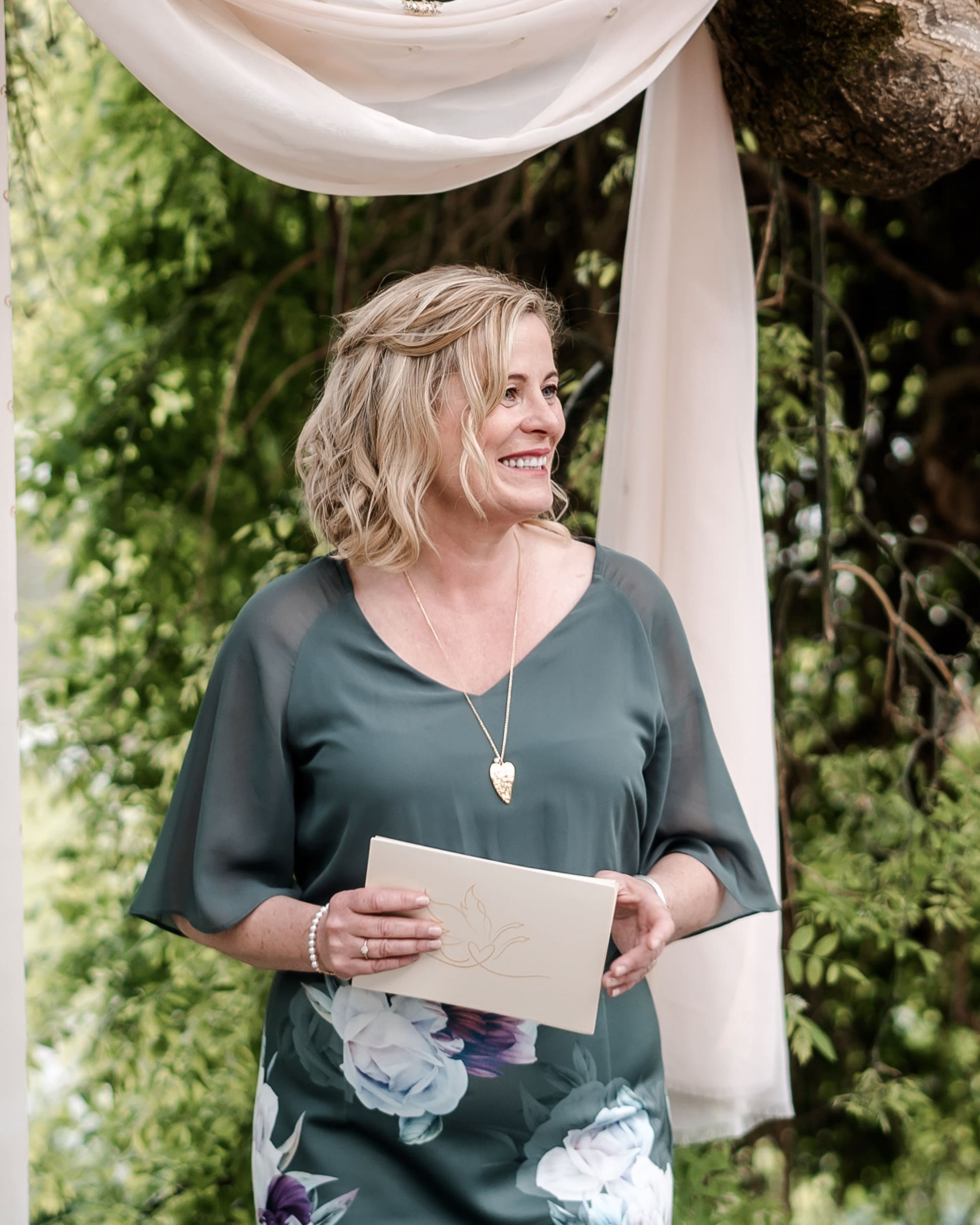
Say yes with Rosa - Rosa Gau
Location/area of application: Stuttgart / Baden-Wuerttemberg and Europe
Languages: German, Spanish, Italian, French, English
Contact: www.rosa-gau.de / @sayyeswithrosa
Ideal for couples who... want a captivating and at the same time calm ceremony — reduced in form but deep in effect.
How would you describe your approach as a wedding speaker?
Captivating — from the very first sentence. And at the same time grounded in a calm, strong presence that holds the space. I work with reduction, but never without depth. In my speeches, I consciously use the element of surprise, because a great speech must do exactly that: surprise. And through that surprise, it touches hearts and opens the space for everything that is to come.
This happens through precise language, the intentional use of stylistic devices, and my sense of timing. Every ceremony can feel solemn and, at the same time, light. For me, lightness does not come from randomness, but from clarity. When everything essential is present, everything else can be released.
Do you see a wedding ceremony more as a performance, as a ritual or as a curated experience?
As a curated ritual. A ceremony, for me, is not a performance or a show, but a consciously created space. Words, music, setting, and silence flow together and create room for everything that wants to be present: laughter, tears, quiet moments — the full spectrum of emotions of a wedding day.
My responsibility as a celebrant is not only to ensure that a ceremony looks beautiful, but above all that it truly touches on an emotional level.
What makes a wedding really meaningful for you?
A ceremony is the moment when everything converges — perfectly, or even better, “perfectly imperfect.” (Spoiler: it’s often the spontaneous, unplanned moments that stay with us most deeply.)
Months, sometimes years, of preparation meet this one profound day. All the anticipation, excitement, joy, love, and connection between two people — and also the connection between the couple and their guests — come together.
When everything aligns, it becomes magical. It carries meaning. And it stays in memory. It is the moment when the couple and their guests realize: NOW is the moment — and we are right in the middle of it. There is space for laughter and wonder, for tears and goosebumps. Everything has its place. The couple can simply surrender and fully experience the moment.
What role do art, culture, or aesthetics play in your work?
A central one. For me, aesthetics are a matter of attitude. Art teaches me clarity, reduction, and precision — the core pillars of my speeches. And trust. Trust that less often touches more deeply and is allowed to resonate. Beyond the wedding day. Because the memory of the ceremony accompanies a couple for a lifetime.
Are there artists, authors, philosophers, or works of art that inspire you?
Oh yes — very many. I love the world of literature and philosophy. In the novels of Isabel Allende with their immense narrative depth, in the poetry of Federico García Lorca or Mascha Kaléko, in the gripping novels of Dan Brown, in works like Pascal Mercier’s Night Train to Lisbon, Márquez’s Until August, or Big Panda and Tiny Dragon by James Norbury — everywhere I find valuable impulses.
Above all, I am inspired by the clarity of ancient philosophy. I am particularly drawn to Heraclitus’ concept of pánta rheî — everything flows. I carry this idea into my ceremonies: the moment in which everything comes together and flows. The Stoics and classical philology — especially Seneca and Cicero — have shaped me deeply in their reflections on time, presence, and inner attitude.
In art, I admire Picasso, Antoni Gaudí, Salvador Dalí, and Frida Kahlo for their visual language and courage to hold their own perspective. Monet and Impressionism also inspire me greatly — because the moment stands above form, atmosphere above perfection, feeling above explanation. This is what I aim to embody in my ceremonies: light, present, emotional, and long-lasting in their resonance.
What is your favorite museum?
I love the architectural ensemble Ciutat de les Arts i les Ciències — the City of Arts and Sciences in Valencia, set within the beautiful Turia Park.
Other places that continually inspire me include the Lapidarium at Schlossplatz Stuttgart (where I married in December 2012), the Stadtpalais and Staatsgalerie in Stuttgart, the Leopold Museum in Vienna, Berlin’s Museum Island — especially the Pergamon Museum. In the Bode Museum, I experienced one of my most powerful art moments when I saw Leonardo da Vinci’s Lady with an Ermine live during the exhibition “Faces of the Renaissance.”
The Lorca Museum in Granada moved me deeply — standing at the writer’s original desk gave me goosebumps. Unforgettable was also visiting the Heritage Village in Abu Dhabi and experiencing desert life firsthand. And as a living total artwork, Gaudí’s colorful Park Güell in Barcelona fascinates me again and again.
The list could go on — I have always been passionate about museums, and the best part is: there is still so much to discover. At the top of my wish list are Cairo (following the traces of ancient historians), Madrid with the Prado, and of course Florence.
How would you describe your language style?
Affectionate and personal, modern and clear. Always precise. With space to breathe and space for every emotion of a wedding day.
What inspires you about weddings in museums or architecturally special spaces?
The architecture of a ceremony space carries the meaning of the moment naturally — it does not need explanation, it simply works. A museum as a ceremony venue inherently brings depth and significance. It is a place where history gathers energy and amplifies our emotions — without being overwhelming.
A sentence that best describes your wedding ceremonies
A ceremony with me as your celebrant is a light, magical moment in which everything is allowed to flow naturally: laughter, tears, and goosebumps.

Julia Hierlemann - YOUR LOVE YOUR STORY
Location/area of application: Munich / Germany and the world
Languages: German, English
Contact: www.yourloveyourstory.com / @yourlove_yourstory
Ideal for couples who... value individuality, depth, authenticity, and a distinctive atmosphere — and who desire a ceremony in which their love and shared story can truly be felt.
How would you describe your approach as a wedding speaker?
My approach as a celebrant is always on equal footing — individual, approachable, and genuine. At the heart of everything is you as a couple: your love, your shared story, the moments you’ve experienced together — quiet and loud — and everything that has shaped you.
I take time to truly get to know you. I listen carefully in our conversations, ask questions that go deeper, and pay attention to what resonates between the lines. I’m interested in what you’ve experienced together, who you are to one another, what connects you, and why you chose each other.
From all of this, words emerge that feel familiar and make your love tangible — told naturally and personally, with depth, poetry, and touches of humor in just the right places.
Do you see a wedding ceremony more as a performance, as a ritual or as a curated experience?
For me, a ceremony is neither a ritual, nor a performance, nor simply a curated experience. These terms can help describe certain aspects of a celebration, but they don’t fully capture what a ceremony truly is.
A ceremony is first and foremost a conscious decision: a clear and honest “yes” to one another. Its essence lies not in what is visible, but in what is felt. It is created through atmosphere — through light, location, music, words that touch the heart, and moments of silence that leave space for emotion.
These moments cannot be staged; they arise when people are truly present and open to one another. That is where the full potential of a ceremony unfolds.
What makes a wedding really meaningful for you?
Warmth, personality, and emotion. When everyone present can fully immerse themselves in the moment — and when the words I speak continue to echo afterward.
If, at the end, you as a couple feel, “That was us — thank you for enriching our day with your presence and your words,” and your guests move into the rest of the celebration feeling joyful and touched, then I know that moment carried real meaning.
What role do art, culture, or aesthetics play in your work?
For me, love itself is an art — the story of a couple, the connection between two people, what defines and inspires them. Finding the right words for that is another art: profound, personal, with a nuance of humor, and always in harmony with the place where you say “yes” — a yes to the past, the present, and the future.
The ceremony becomes a complete work of art that reflects your past and present as a couple while celebrating the transition into your shared future. Together, we compose the melody that arises when love, words, music, location, and people harmonize.
It is not just about the speech or the visible elements — it is a process that matures over months and unfolds fully on the day itself, like a living, breathing artwork.
Are there artists, authors, philosophers, or works of art that inspire you?
Many artists and authors inspire me. At the moment, I’m reading with great enthusiasm works by Martin Suter, Takis Würger, Benedict Wells, and Julia Cameron.
Since my youth, I’ve been fascinated by the symbiosis of Monet’s paintings and Debussy’s compositions — a perfect example of how different art forms can amplify one another and create new emotional dimensions. Jazz music has accompanied me for years, inspiring me with its improvisation, energy, and expressiveness. At the same time, I find inspiration in the clarity, elegance, and timeless aesthetics of mid-century architecture.
What is your favorite museum?
There are so many extraordinary museums that it’s difficult to choose just one. One I always return to with joy is the Pinakothek der Moderne in Munich. Its versatility and ever-changing, inspiring exhibitions captivate me time and again. I also have especially fond memories of the Metropolitan Museum of Art in New York.
How would you describe your language style?
My language style reflects my approach as a celebrant: personal, approachable, and on equal footing — natural, warm, and sincere. It blends depth, poetry, and humor in the right places, always tailored to you as a couple. With a balance of calmness, lightness, and ease, my words make your love and your story truly tangible.
What inspires you about weddings in museums or architecturally special spaces?
I’m fascinated by discovering how museums and architecturally significant spaces came into being — the thoughts, emotions, and visions that shaped them. When I stand before inspiring artworks or in remarkable spaces, I could spend hours reflecting and interpreting. The most beautiful part is how I lose all sense of time and become fully present.
In ceremonies, I experience something very similar. Here too, it is about discovering the love and story of two people — understanding how they have created their own “museum of life,” filled with shared experiences, emotions, values, and milestones.
Celebrating this love and this story as a complete work of art within a museum or architecturally distinctive setting is what truly excites me.
A sentence that best describes your wedding ceremonies
I accompany you on equal footing and with lightness — with words that touch, create closeness, and make your love and your story deeply tangible.

Liebesbekenntnis - Julia Pöhler
Location/area of application: Lucerne / Switzerland and Europe
Languages: German & English
Contact: www.liebesbekennnis.ch/ @liebesbekenntnis .ch
Ideal for couples who... see their ceremony as an emotional experience filled with depth and joy for life — and who appreciate language as an art form.
How would you describe your approach as a wedding speaker?
Joy for life meets depth. As a celebrant, I draw on my full rhetorical potential — storytelling, gesture, facial expression, word choice, rhythm, and emphasis — to captivate my audience and take them on a journey through the couple’s love story. Loud laughter meets quiet moments where tears are gently shed.
Do you see a wedding ceremony more as a performance, as a ritual or as a curated experience?
Performance and experience — but it is important to me not to present the same “show” every Saturday. It is more like a theatre piece authentically tailored to each individual couple. I write the script, create the dramaturgy, direct the scene, manage the sound, and take on a supporting role… but never the leading one. The main characters are always my couples and their love story.
What makes a wedding really meaningful for you?
The emotions that arise within the couple and their guests. The thoughts and feelings I awaken in them. After the ceremony, nothing tangible remains — but the moving sense of joy, gratitude, and connection lives on in their hearts and memories.
What role do art, culture, or aesthetics play in your work?
From the bottom of my heart, I wish storytelling would once again be valued as the art form it truly is — just like music, painting, or dance. Telling stories is one of the oldest forms of art, a true cultural treasure. Unfortunately, I increasingly hear of ceremonies led by amateurs simply because they are free and used to giving presentations in their jobs — but that is something entirely different.
Are there artists, authors, philosophers, or works of art that inspire you?
Above all, I am inspired by the love stories of my couples. I would never have imagined how differently people live and experience love and partnership.
What is your favorite museum?
A difficult choice — either the Belvedere in Vienna or the Städel Museum in Frankfurt.
How would you describe your language style?
Vivid, surprising, sensitive, engaging all the senses, eloquent — and most importantly, always adapted to the couple’s own language and tone.
What inspires you about weddings in museums or architecturally special spaces?
I love the calm and aesthetic presence these places radiate. They allow everyone to focus more deeply on the moment. At an outdoor ceremony, there are always passersby, environmental noise, unpredictable weather — and many distractions.
A sentence that best describes your wedding ceremonies
We celebrate your love story and create a fleeting moment that lives on in your hearts as a cherished memory.

Marina Danner
Location/area of application: Munich / Germany and the world
Languages: German
Contact: www.marinadanner.de/ @marinastefaniedanner
Ideal for couples who... wish for a calm, profound, and aesthetically reduced ceremony that leaves space for genuine emotion.
How would you describe your approach as a wedding speaker?
Calm and deep, like life itself: there should be room for everything. We want to laugh, cry, reflect, and feel light. We journey through the past, into the present, and toward the future. It is not linear — it comes with highs and lows — and that is exactly what is reflected in my ceremonies.
Do you see a wedding ceremony more as a performance, as a ritual or as a curated experience?
For me, a ceremony is a carefully crafted concept that should never be forced into a rigid framework — because no love deserves that. A ceremony is a pause, a moment to look back and look ahead, without being overloaded with rituals. It is a moment, a celebration, an experience.
What makes a wedding really meaningful for you?
The coming together of all people present. It is a fact that this exact constellation of people will never gather again in the same way. That is why a ceremony is something unique and unrepeatable. No moment can ever be recreated. That is why it is so important to plan it well — and then to be fully present within it.
What role do art, culture, or aesthetics play in your work?
For me, language is art. Finding the right words — not too loud, not too quiet, not too much, not too little — is a craft. Language is also aesthetics. I prefer it reduced: not overly flowery, not heavy, not overloaded with meaning. I like my words to create space.
And speaking of aesthetics: I am aesthetic through and through. I have a sense for shapes, colors, and beautiful things. This is reflected in my ceremonies, even in what I wear — no loud, colorful dresses, but something beautiful that does not take up too much space. I feel at ease in aesthetic environments. In non-aesthetic surroundings, I truly do not feel well — no joke.
Are there artists, authors, philosophers, or works of art that inspire you?
Benedict Wells, Kafka, and Marianna Leky are voices that have shaped me and continue to do so. I am also deeply inspired by music and song lyrics that move me and influence my creative work.
What is your favorite museum?
I worked for many years in a museum building — Schloss Herrenchiemsee. What I love about it is the reverence people feel in such spaces. Voices soften, perspectives widen. The scent, the silence, the sense of devotion.
How would you describe your language style?
Clear, calm, and deep. I speak in a contemporary language that is not superficial — one that carries depth, precision, and opens space.
What inspires you about weddings in museums or architecturally special spaces?
The interplay between outer and inner beauty. The feeling that people become more refined in special spaces — their senses more attuned, as they quiet themselves and become more present. A beautiful, meaningful place is the perfect backdrop for words that carry weight.
A sentence that best describes your wedding ceremonies
A journey through life with depth, clarity, emotion, and the gift of capturing the essence of two people and their relationship in words.
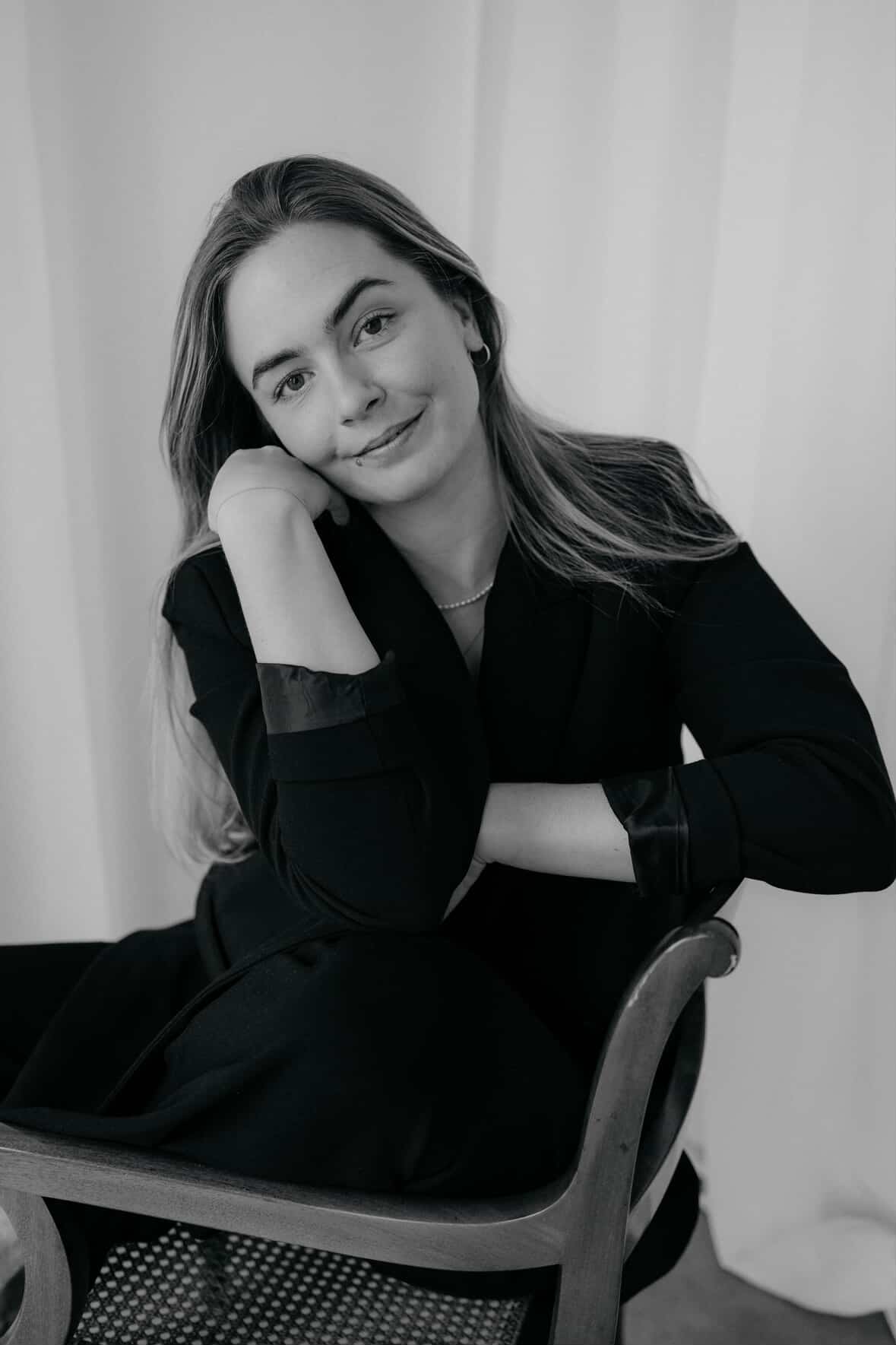
The Paris Officiant - Laura
Location/area of application: Paris / France and the whole world
Languages: English, French, German
Contact: www.theparisofficiant.com/ @theparisofficiant
Ideal for couples who... wish for a narrative, aesthetically refined ceremony in which ritual, presence, and atmosphere come together as one harmonious whole.
How would you describe your approach as a wedding speaker?
Narrative and emotional, vivid and ceremonial — with a balance between light moments and profound feelings.
Do you see a wedding ceremony more as a performance, as a ritual or as a curated experience?
Ideally, it is a unity of all three. The core of a ceremony is the ritual: it marks a transition and creates meaning through symbols, language, and promises. The ceremony reaches people through its performative delivery — not in the sense of a “show,” but through intentional presence: voice, rhythm, pauses, eye contact. A carefully curated framework — location, dramaturgy, timing, music, atmosphere, positioning, and coordination — ultimately transforms it into an unforgettable experience.
What makes a wedding really meaningful for you?
A ceremony becomes meaningful when it truly reflects the couple — when they recognize themselves in it and can express who they are. This can happen through music, readings, a ritual, the location, their shared story, personal vows, and much more. If a couple includes elements purely out of expectations from family, friends, or social media, it often holds little meaning for them. That’s why I encourage my couples to ultimately listen to their hearts — so they can begin their shared life together in a way that genuinely feels right to them.
What role do art, culture, or aesthetics play in your work?
With a ceremony, we celebrate a couple’s love story and the beginning of a new chapter. Art and culture shape my storytelling and enrich the ceremony through language, imagery, and references. The location is chosen intentionally and becomes part of the narrative — whether it is a castle, a historic salon, or a museum. Space, atmosphere, and meaning merge into a coherent whole. Since I am visible in many photographs as a celebrant, I even select my outfit to complement the overall concept — small details with a powerful effect.
Are there artists, authors, philosophers, or works of art that inspire you?
Yes, I find a lot of inspiration in art and literature
- Philosophy: Simone de Beauvoir, Alain de Botton, Bell Hooks, Sharon Salzberg
- Literature and famous and moving correspondence: Marguerite Duras, VictorHugo, George Sand, Rainer Maria Rilke, Beethoven, Napoleon.
- Music and lyrics of classical French chansons: Jacques Brel, Barbara, Juliette Gréco
- Visual arts: classical Parisian photography (Robert Doisneau, Édouard Boubat), sculptures (Auguste Rodin, Camille Claudel), painting (Auguste Renoir, Claude Monet, Gustav Klimt)
What is your favorite museum?
I feel incredibly fortunate to live in Paris, with its extraordinary variety of museums. Beyond the great classics (the Louvre, Musée d’Orsay, Petit Palais), institutions such as Fondation Louis Vuitton, the Orangerie, Musée Carnavalet, Bourse de Commerce, Maison Européenne de la Photographie, and Maison Victor Hugo have truly captured my heart.
How would you describe your language style?
Literary, clear and narrative — with a touch of poetry.
What inspires you about weddings in museums or architecturally special spaces?
Ceremonies in museums or architecturally remarkable spaces fascinate me because art and architecture become part of the language itself. They remind us that love is not an isolated moment, but something embedded in time, culture, and the stories that came before us. The ceremony becomes part of this context, creating a lasting connection between space, moment, and people.
A sentence that best describes your wedding ceremonies
A ceremony as unique as the couple’s love story, leaving space for authentic emotion.
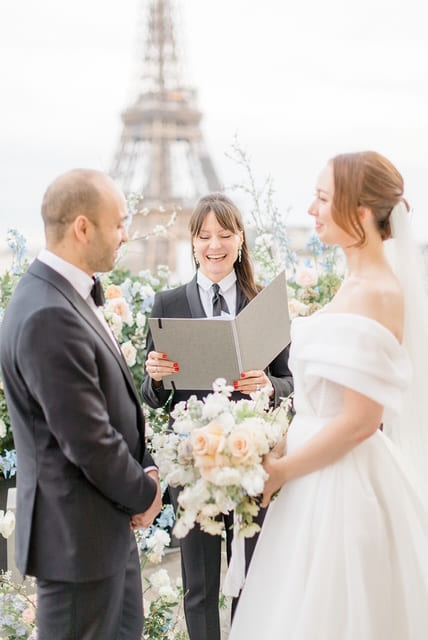
Redekünstlerin - Sabine Wanek
Location/area of application: Stuttgart / Baden-Wuerttemberg and Europe
Languages: German, English
Contact: www.redekuenstlerin.de/ @redekunstlerin
Ideal for couples who... appreciate language that creates imagery, makes values tangible, and places their connection within a broader cultural, aesthetic, or philosophical context..
How would you describe your approach as a wedding speaker?
After one ceremony, a photographer once asked me whether I was a writer. That touched me deeply. He said my phrasing felt different — original and distinctive. And he was right. Having studied rhetoric in Tübingen, every single formulation matters to me. Above all, it must fit the couple, their idea, and the setting of the wedding.
Do you see a wedding ceremony more as a performance, as a ritual or as a curated experience?
I would describe a civil ceremony as a “curated experience.” Or even as dramaturgical work. My role is to place the couple — two people who have chosen one another with all their being, hoping, loving — with their emotional world, their shared and individual understanding of life, their values, and their vision of what truly matters — fully at the center and let them shine in all their facets.
Framed by the affection and joy of their guests, and perhaps by their shared passion — whether art that surrounds them or a theme they have chosen for their wedding — we celebrate them. To sensitively and engagingly bring out both their individuality and their “togetherness” is my beloved task. And yes, it should be an experience — filled with familiar emotions and fresh perspectives. With great feelings, liberated laughter, and gentle smiles about ourselves, about life, and about all that is yet to come.
What makes a wedding really meaningful for you?
The couple themselves. Their story. And everything that matters to them.
What role do art, culture, or aesthetics play in your work?
I see myself as an artist of speech, which is why emotional and, above all, precise rhetoric holds a central place in my work. The location of the ceremony is equally important. My relationship with the couple is shaped by openness, trust, and dedication. How they sit at the front during their ceremony. When they stand. How they face each other, hold hands, exchange vows — against an unforgettable backdrop. All of this is personal, coherent, and beautiful.
Are there artists, authors, philosophers, or works of art that inspire you?
Hannah Arendt deeply inspires me in the way she reflects on love. She makes it clear that love and partnership cannot rest solely on feelings. It is more than that. Love reveals itself in how two people stand together in the world — in how they act, for themselves and with one another. For Arendt, love involves responsibility and freedom, space to grow and unfold. Love is a decision — a decision to connect your life with the one you love.
What is your favorite museum?
As a student, I once lived in Florence for half a year. During that time, I visited almost every museum in that wonderful city, which feels like an open-air museum — art and sculptures at every corner. The Uffizi impressed me the most.
I was especially fascinated by Botticelli’s La Primavera and The Birth of Venus. The visual symbolism of love, beauty, and harmony. The flowing fabrics, the graceful bodies, the elegance — and the mythological depth.
How would you describe your language style?
Emotional, rhetorically refined, ceremonial, and literary. What matters most to me is that images arise in the hearts of the couple and that a vivid, special atmosphere unfolds — almost as if they were sitting inside their own film. The film of their lives.
What inspires you about weddings in museums or architecturally special spaces?
A ceremony in the Uffizi in front of La Primavera — that would be a dream. It’s the atmosphere. That, to me, is what makes a ceremony meaningful. The aesthetics and symbolism of a place inevitably influence the ceremony — the metaphors, the language, the imagery woven into the speech. The couple’s connection to a beautiful space or their shared love and fascination for a painting that touches them deeply.
Take Monet’s deep, magical blue-green-lilac water lily pond. How would it feel for the couple to step into that very pond? On their skin, in their hearts? What do they associate with it? What experiences do the water lilies represent? Which memories of their love rise to the surface, waiting to be told and shared?
A sentence that best describes your wedding ceremonies
My ceremonies are individually crafted, heartfelt works of art — reduced to the essential, reflecting the lives of my couples, painted in their favorite colors and forms.

Jennifer Patrice
Location/area of application: London / Great Britain and the whole world
Languages: British English
Contact: www.jenniferpatrice.com/ @jennifer_patrice_celebrant
Ideal for couples who... want to share their story with confidence in order to create a tailor-made ceremony together that will be remembered long after the wedding day.
How would you describe your approach as a wedding speaker?
I am very calm in my approach as a wedding speaker. What's most important to me is that my couples know that what's important to me is that they experience a ceremony that truly reflects them and their relationship. A ceremony in which your guests immediately feel that today it is all about them.
Do you see a wedding ceremony more as a performance, as a ritual or as a curated experience?
I see a ceremony primarily as an experience for my couple. First and foremost, they should experience authenticity and sincerity and find the ceremony profoundly meaningful. I would also like your guests to experience exactly that.
What makes a wedding really meaningful for you?
A ceremony becomes meaningful for me when my couple openly shares all their expectations and wishes with me. If they entrust their vision to me, we can create a ceremony together that everyone will remember for a long time — even after the last dance is done and everyone has returned home again.
What role do art, culture, or aesthetics play in your work?
I think they play a big part. These elements reflect my couples — they are an expression of their personality. Whether in language, in music, in visual details or in symbolism: Every detail counts and contributes to creating something special. It shouldn't look staged, but be authentic.
Are there artists, authors, philosophers, or works of art that inspire you?
Maya Angelou is one of my favorites. Especially her quote: “People will forget what you said, people will forget what you did, but they will never forget how you made them feel.” That is exactly what is important to me—that my couple feels seen, supported and valued. I want them to feel that this ceremony is exactly what they've always dreamed of — even though they may not have known it was possible.
It may sound unusual, but I find Daniel Roseberry, the designer of Schiaparelli, very inspiring. I am very impressed by the way he sees the world and creates art through his designs.
One of my favorite poems is “I Carry Your Heart with Me” by E.E. Cummings.
My favorite work of art shows Aristotle with his student Alexander the Great. I saw this image for the first time, I think in 2013, when I was working on a digitization project at the British Library in collaboration with the Qatar National Library/Qatar Foundation. It was one of the works that were digitized for the newly created portal. It is not a flashy or spectacular image — rather calm and reserved — and yet, for inexplicable reasons, it has touched me deeply. I hope that makes sense.
What is your favorite museum?
Oh, there are so many! Here is just a selection: The Louvre with its glass pyramid and the Mona Lisa, the Bodleian Library with its 455 ceiling bosses representing the sponsors, the Sheldonian Theatre with the ceiling painting by Robert Streater, the Natural History Museum with its impressive hanging skeleton, my “local museums” — the Horniman Museum and the National Maritime Museum, in particular the Cutty Sark, with which I have many childhood memories connect.
The Tate and the National Gallery were my first conscious museum experience. A mentor named Rose took me there when I was around eight or nine years old.
How would you describe your language style?
Depending on the couple, my language style can be very different. It is important for me to show that I understand what they want for their ceremony. We must be flexible and offer choices to our couples without remaining rigid. The result is a tailor-made ceremony that really suits them. There is no concept for everyone — and I don't want to be a “standard” wedding speaker.
What inspires you about weddings in museums or architecturally special spaces?
Actually everything — but especially the history of these places. I like to include a brief summary of the history of the venue into the ceremony so everyone knows where they are. This makes it noticeable what preceded this day — and how this wedding day is now itself part of the history of this place.
A sentence that best describes your wedding ceremonies
My ceremonies are full of joy. My business mentor Dr. Byron Cole has given me the nickname “The Maker of Happiness.”
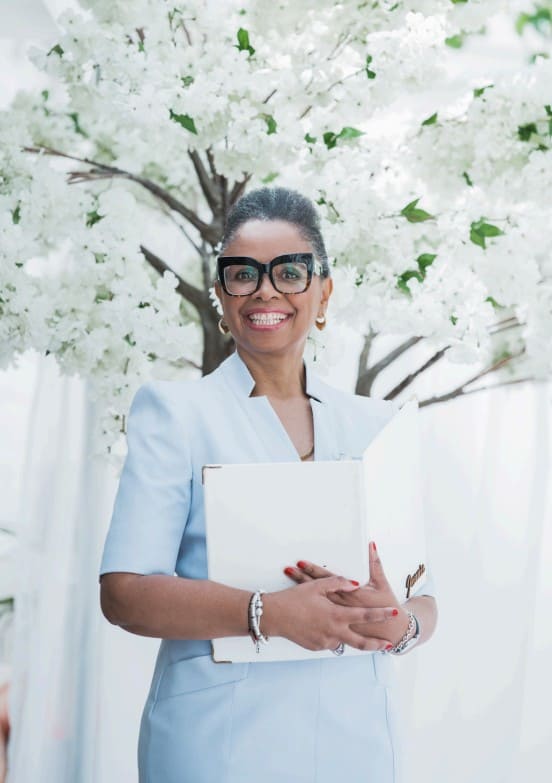
Evylin & Words - Evylin Schenkel
Location/area of application: Regensburg /Southern Germany and Europe
Languages: German, English, Russian
Contact: www.evylinandwords.de / @evylin .and.words
Ideal for couples who... appreciate romance without cliché and want to experience their ceremony as a consciously crafted, tailor-made moment that lingers in memory.
How would you describe your approach as a wedding speaker?
My standard: every ceremony is one of a kind. Modern and non-replicable. It grows out of the couple’s story, their dynamic, and their wishes. Romance, yes — cliché, no. What matters to me is that the moment feels unique, not like a variation of something already seen. My ceremonies work only on that day and only for that couple.
Do you see a wedding ceremony more as a performance, as a ritual or as a curated experience?
I see a ceremony as an experience that is consciously designed. It has dramaturgy, focus, and a clear attitude. You may laugh, you may be moved — and the two do not contradict each other. What matters most to me is that the couple and their guests perceive it as truly unique. A well-crafted ceremony does not fade into the overall wedding program; it creates a tailor-made highlight that people still speak about years later.
What makes a wedding really meaningful for you?
A ceremony becomes meaningful when it gives the couple space to truly be themselves — with all their edges and everything that genuinely matters to them. If laughter moves through the rows and tears are quietly wiped away, I know I have done my job well.
For me, a ceremony holds meaning when every moment carries weight, the couple’s story is told clearly, and the atmosphere reaches every single person present — not just the couple.
What role do art, culture, or aesthetics play in your work?
Art, culture, and aesthetics shape my eye for detail. My work is about choosing words that feel like curated moments — clear and finely nuanced. I consciously work with rhythm, tension, and imagery so that the ceremony is not merely “nice.” Each speech is crafted with a refined sense of rhetoric and a balance between entertainment and depth. For me, this is the aesthetic core of my work.
Are there artists, authors, philosophers, or works of art that inspire you?
Artistically, I have always admired Gustav Klimt (The Kiss is beautiful, though I prefer Pallas Athene). I also love a vibrant mix of works by Rubens, van Gogh, and Frida Kahlo.
Perfume by Patrick Süskind remains my all-time favorite novel — no other book has replaced it. Musically, Satie’s Gymnopédies come to mind immediately, and as an absolute classic: Beethoven.
What is your favorite museum?
Wien Museum Karlsplatz (my absolute favorite painting hangs there: Klimt - “Pallas Athena”).
How would you describe your language style?
Contemporary - modern and humorous. I love it when the guests think, empathize and laugh along.
What inspires you about weddings in museums or architecturally special spaces?
Museums and architecturally distinctive spaces carry their own gravitas. They hold a calm and depth that often dissolves outdoors. Voices sound clearer, guests are more focused, and the atmosphere becomes more intense. For me as a celebrant, that means: less decoration, more substance.
A sentence that best describes your wedding ceremonies
Tailor-made ceremonies for real experiences.
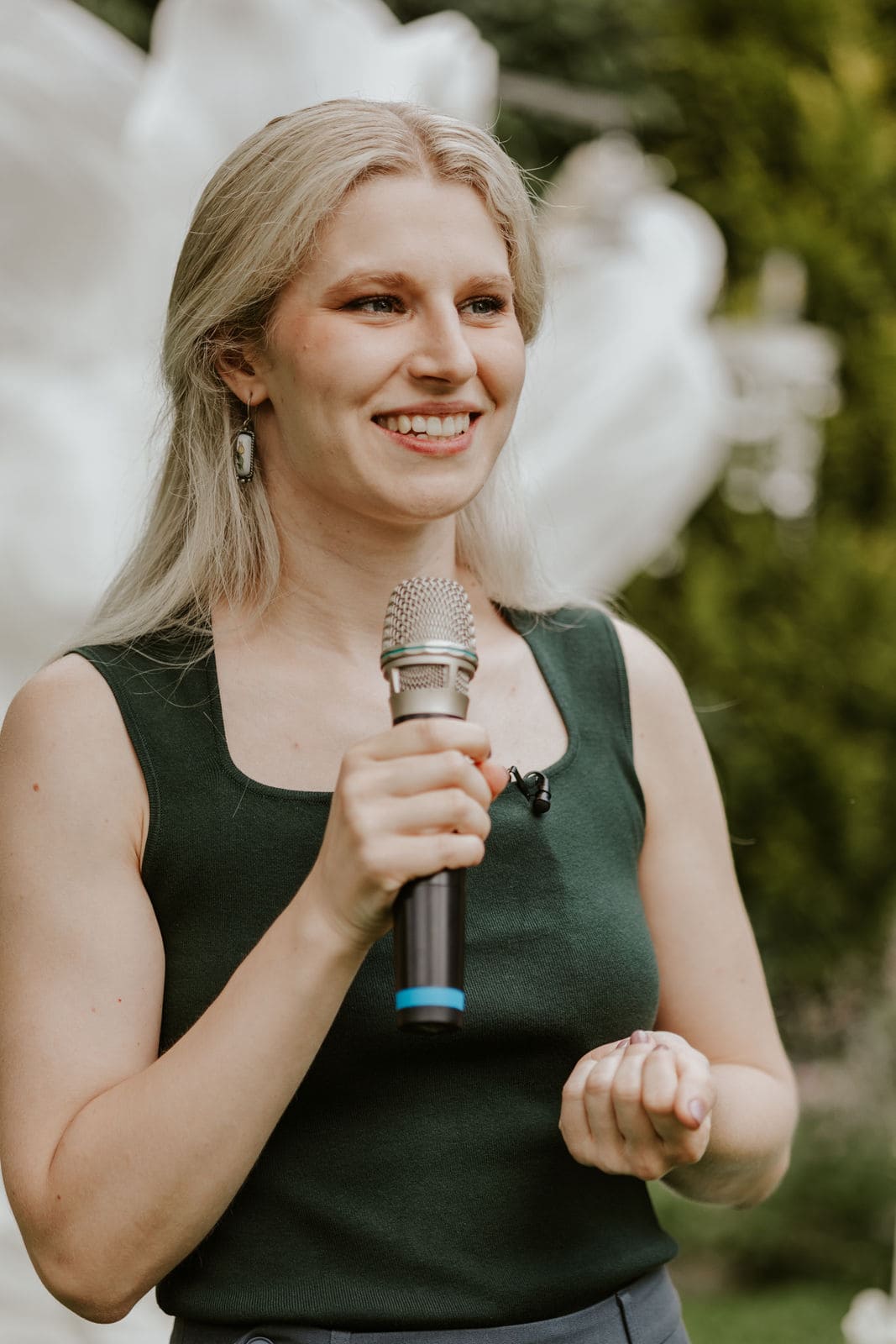
Yves Reden - Yve Skorb
Location/area of application: Hamburg / Northern Germany and Europe
Languages: German
Contact: www.yvesreden.com/ @yvesreden
Ideal for couples who... desire a personal, profound, and authentic ceremony that truly reflects their story.
How would you describe your approach as a wedding speaker?
My approach as a celebrant is very much guided by the couple’s wishes. I have in-depth conversations with my couples to understand what matters to them individually and as partners — what defines them, what they are passionate about, and how they envision their ceremony. My goal is for the ceremony and the speech to fit this specific couple perfectly. It is a shared journey of creation in which I accompany and support them so they receive a ceremony that genuinely mirrors who they are: individual, personal, unmistakable — just like their relationship.
I love storytelling and creating images in the minds and imaginations of those listening. My aim is not simply to speak, but to go deeper — so that guests think, “Yes, that’s exactly them.” I want to create a moment of recognition, a moment that cannot be repeated and is tailored precisely to these two people. Because this ceremony is about them — their relationship, their love. And every love is unique. That uniqueness should be felt in the ceremony and in the speech. In short, I would describe my approach as narrative and celebratory — that feels most true to who I am.
Do you see a wedding ceremony more as a performance, as a ritual or as a curated experience?
I see a ceremony primarily as a curated experience — a solemn act. A wedding ceremony marks the beginning of something new: two people choosing to walk through life together. This day should be free from rigid expectations or predefined concepts. Every couple should decide how they want to shape their ceremony in order to create a truly unique experience.
It should not be a show or a performance. For me, a ceremony is an important and precious step that deserves to be honored and celebrated. Pure. Real. Authentic. And above all, free from imposed expectations — free from trying to fit into something just to impress others.
What makes a wedding really meaningful for you?
A ceremony becomes meaningful to me when I feel genuine emotion — anticipation, excitement, joy, and above all, love. When the ceremony celebrates the unique connection between two people — when they celebrate their love and themselves as a couple — it becomes truly significant.
And it must feel real. Laughter, tears, emotion. Close to the heart, less about outward display. And for me, the most beautiful moment is when they look at each other during their vows and the feeling becomes almost tangible.
What role do art, culture, or aesthetics play in your work?
Aesthetics are incredibly important to me and play a central role in many areas of my life — including wedding ceremonies. A harmonious and cohesive setting that supports the significance of the moment with dignity is invaluable. A ceremony honors deep emotions between two people, and I believe this should also be reflected visually.
This is not about aesthetics for admiration or outward display. It is about intentionally creating or enhancing a mood through aesthetics — one that turns the act of marriage into a special, extraordinary, and unforgettable moment.
Are there artists, authors, philosophers, or works of art that inspire you?
Absolutely. Art moves me deeply. Botticelli is one of my favorite artists — especially La Primavera and The Birth of Venus. They are paintings I could lose myself in for hours. It is astonishing what a human being can create.
I also love reading, especially historical novels such as those by Ken Follett. I immerse myself completely in these stories — they inspire me and allow me to step away from everyday life. They transport me into other worlds and perspectives. There is so much in art, history, and aesthetics that stimulates and inspires me. I truly enjoy diving into past eras and letting my thoughts wander.
What is your favorite museum?
My absolute favorite museum is the Uffizi Gallery in Florence. I find it incredibly impressive. The entire old town of Florence captivates me every time — it feels like stepping into another era filled with art and culture. Florence is one of my favorite places. Since my first visit, I have been fascinated. Each time I return, the Uffizi is a must. There is such an extraordinary concentration of talent in one place. I could wander there for days, though of course it is impossible to see everything at once. The Medici truly created something incomparable and magnificent.
How would you describe your language style?
My language style is visual and literary. Influenced by extensive reading and my deep fascination with language itself, I love playing with words and using them intentionally. It is incredible what language can create — it can cause harm, but it can also create something deeply beautiful and meaningful.
I find it a wonderful challenge to spark imagination through my speeches — to create images in people’s minds and evoke emotion through those images. That, to me, is something profoundly fascinating.
What inspires you about weddings in museums or architecturally special spaces?
At museums and in architecturally special spaces, I am impressed that an extraordinary atmosphere can be What fascinates me about museums and architecturally unique spaces is the extraordinary atmosphere they create — the lighting, the calmness, the sense of reverence. Depending on what is desired, a museum can create a feeling of dignity and depth.
I love spaces that immediately feel like they have a story to tell — spaces with soul. They evoke something different within us. And being able to become part of that atmosphere, even for a short time, adds another layer of meaning to the ceremony.
A sentence that best describes your wedding ceremonies
My ceremonies are inspired by the couple — and that is why each one is truly one of a kind.

Herzensfrei - Maria Allegretti
Location/area of application: Ulm / Southern Germany and Italy
Languages: German
Contact: www.herzensfrei.de/ @herzensfrei .maria
Ideal for couples who... desire a ceremony that feels light yet deeply moving — without a show, but rich with meaning between the lines.
How would you describe your approach as a wedding speaker?
My approach is narrative. I care deeply about soft transitions. There are no clichés in my ceremonies, nothing unnecessary — but plenty of meaning beneath the surface. And yes, I give the setting a sense of solemnity. Not only through my words, but also through my presence, expression, and the way I hold the space.
Do you see a wedding ceremony more as a performance, as a ritual or as a curated experience?
For me, a ceremony is not a performance. It is a curated ritual. Not an act or a show, but a consciously designed moment in which everything interlocks like finely tuned gears — the chosen music, the pauses, the carefully selected quotes that evoke specific emotions. My ceremonies are meant to feel light, yet resonate deeply.
What makes a wedding really meaningful for you?
A ceremony becomes meaningful when the couple truly recognizes themselves in it. When they feel, “This is us. This is what our connection feels like.” Not through grand gestures or spectacle, but through honest words. I create an atmosphere where emotions are allowed to exist without needing to be explained.
What role do art, culture, or aesthetics play in your work?
Both aesthetics and art can provide the perfect framework for a ceremony. I have played the violin since I was five years old, and through music I learned what art truly means to me. Art can carry emotions — sometimes heavy, sometimes light — and yet always beyond pure language.
What is your favorite museum?
To be honest, I love my friend Marion’s studio and my friend Maria’s private gallery. They are my places of comfort — not the Louvre or any major museum.
Of course, I could list impressive masterpieces. But what fascinates me about these two places is the connection between the artwork and the people. The stories they tell me — how they discovered a quilt through a small business card in a shop window, how they spread it out on a meadow after buying it because they couldn’t wait to get home. The emotions they attach to these pieces. That’s when paintings truly come alive for me.
And that is the same curiosity I bring to couples. I want to understand why they feel drawn to a particular artwork or museum — and I weave that feeling into their ceremony.
What inspires you about weddings in museums or architecturally special spaces?
Special spaces naturally carry presence and posture. They invite us to slow down, to listen more carefully, and to experience the moment more consciously. Architecture, in my view, can hold a ceremony without ever overpowering it.
A sentence that best describes your wedding ceremonies
A ceremony with lightness — and a depth that lingers.
Conclusion: The right voice makes the difference
A wedding in a museum thrives on atmosphere, meaning and restraint.
The right wedding speaker reinforces exactly that — without putting herself in the foreground.
When language, space and art intertwine, the result is a ceremony that lasts.
Quiet. Sure. And deeply moving.


